Author: Carter L. McLellan – Date: September 16, 2024
Contents
- Introduction
- The life and death of James Worrell
- Points of interest in the Worrell case
- Conclusion
- Notes
Introduction
Previously, I summarized the life and rumors surrounding JFK assassination witness Lee Bowers. I became interested in Bowers after reading his intriguing testimony and seeing his name listed under “Suspicious Deaths” related to the JFK assassination on ISGP Studies.
After moderately deep study, I came to the conclusion that foul play in Bowers’ one-vehicle car accident on August 6, 1966, might not be ruled out, so long as a second shooter besides Oswald could be established in the grassy knoll. Bowers should have been the best witness to see a shooter behind the picket fence and to see the gunman fleeing the scene. Yet, in his recorded testimony, besides vague references over the few years to some “commotion” or “puff of smoke” or “flash of light,” he allegedly stated to Mark Lane in unreleased transcripts that there was no one behind the fence.
In an attempt to establish a fourth shot, I closely examined the Zapruder film to try and see when Connolly was hit. I was hoping to find evidence that Kennedy and Connally had been hit by separate bullets. However, I could see no clear reaction to a shot except for the moment when Kennedy was hit by a bullet for the first time. I was unable to determine whether or not the first shot missed or hit Kennedy. These facts coupled with Bowers unreleased testimony inclined me to believe the single bullet theory might be true and prevented me from fulling jumping behind the theory of a second shooter. That also caused me to lean toward no foul play in the death of Bowers.
Yet I was determined to leave no stone unturned, so I shifted my investigation toward another “suspicious death”, that of James Worrell. Like Bowers, Worrell had heard something unusual during the sequence of shots. Bowers heard three shots, but believed the second and third shots were too close together to have came from the same rifle. Worrell not only saw a rifle firing from the Texas School Book Depository, but he heard four shots.
Both men wore glasses, and both saw something out of the ordinary. Bowers saw three rather suspicious cars come in and out of the parking lot behind the fence, and he saw something unexplained around or behind the fence. Worrell on the other hand, who should have been able to observe the three cars entering and exiting, after hearing and seeing the shots took up a position behind the TSBD, where after a few minutes he saw a man run out of back of the TSBD and away from the scene. Bowers’ position was located behind the TSBD enough where he could have potentially seen that fleeing man and corroborate Worrel’s testimony. Yet, Bowers never spoke of seeing such a thing, nor does it appear he was ever asked. Something else I found peculiar in the middle here was the testimony of J.C. Price, who saw a man running from behind the fence, through the cars, and on behind the TSBD, into the area where Bowers and Worrell were both positioned. Both men never described seeing such a man.
And that is not all both Bowers and Worrell held in common. Both men had rather peculiar interactions with the FBI, as will be discussed later. Lastly, both men died in single-vehicle accidents in the same year. Bowers died on August 6, 1966, Worrell died on November 5, 1966, almost exactly three months apart and both in Texas. Worrell’s accident was actually near Bower’s neighborhood in Casa View.
In following these “suspicious deaths” I felt that an examination of the Worrell case would be an appropriate next step in my JFK assassination investigation. But this time, instead of focusing on the Grassy Knoll, we will be focusing more on Lee Harvey Oswald and the Texas School Book Depository.
The life and death of James Worrell
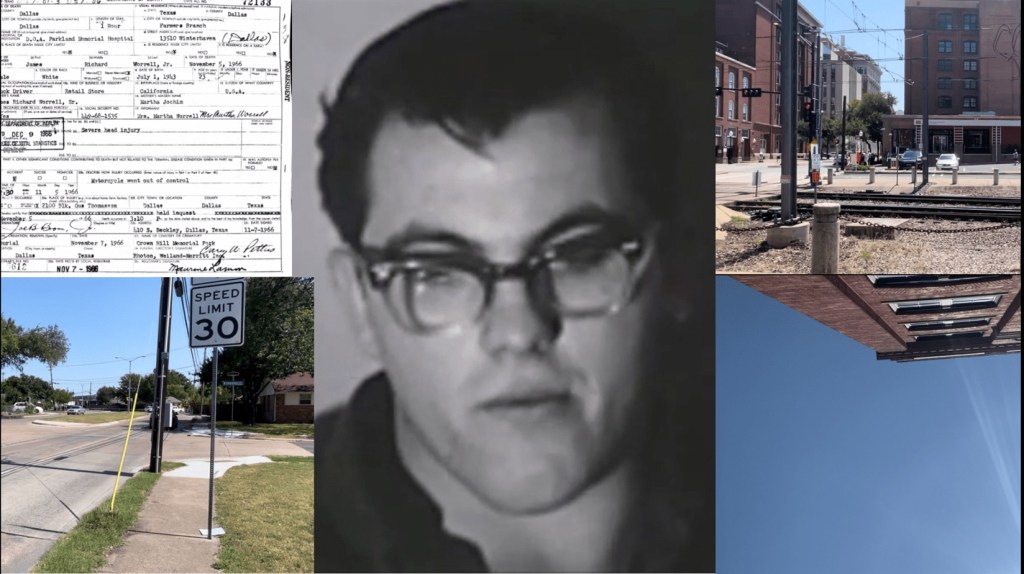
On July 1, 1943, James Richard “Dicky” Worrell, Jr. was born to James R. Worrell, Sr. and Martha Jochim, in Livermore, Alemada County, California. Worrell did have a sister, although I do not know her name and I am not yet sure if she was older or younger, but I assume the former. Around 1945-1946, the family moved to Abilene, Texas. (1)
Around 1952, the family moved to Dallas and at some point came to live at 3140 Storey Lane, Dallas. Worrell, along with his mother and sister, eventually moved to 13510 Winterhaven Drive, Farmers Branch, Texas. I am unaware what happened to the father, but it appears he was not living with them by this point. Seemingly by around 1959, Worrell began to attend Thomas Jefferson High School, however, he stopped attending since October 1963. I assume he must have been held back a couple of years at some point. (2)

Around 1952, the family moved to Dallas and at some point came to live at 3140 Storey Lane, Dallas. Worrell, along with his mother and sister, eventually moved to 13510 Winterhaven Drive, Farmers Branch, Texas. I am unaware what happened to the father, but it appears he was not living with them by this point. Seemingly by around 1959, Worrell began to attend Thomas Jefferson High School, however, he stopped attending since October 1963. I assume he must have been held back a couple of years at some point. (2)
The day of the assassination
Worrell, 20, woke up early on Friday, around 6:30am, on November 22, 1963. He was getting ready to go to school, but decided to skip that day to see the President come to Dallas. His mother Martha left around 7:30am and his sister left around 8:00am. About the same time his sister left, Worrell also left the house and managed to hitchhike down to Love Field Airport, where Air Force One was expected to arrive from Fort Worth. (3)
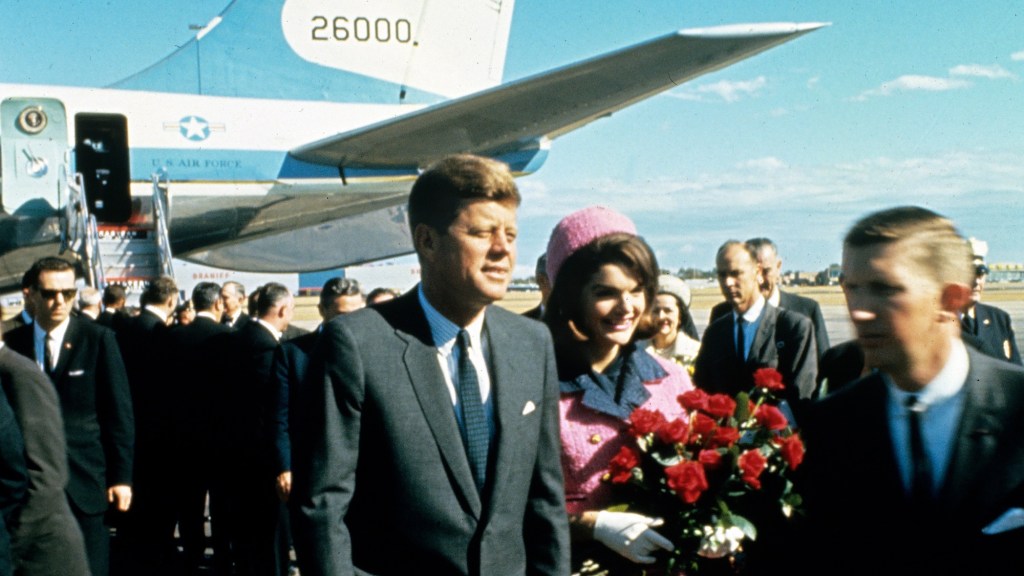
After a while, Worrell made it to Love Field by around 9:00am. It’s possible that Worrell’s timeline is off to some extent. He claimed to have been at the airport when Kennedy arrived and stepped out of the plane, which was at 11:38am. Worrell saw this but really didn’t get a good view, so he left before the Presidential motorcade departed. He walked down toward Elm Street and caught a bus down toward Dealey Plaza. After leaving the bus, he made his way to the Main and Houston corner of the Texas School Book Depository (TSBD), standing 4-5 feet from the building. Worrell claimed to have arrived at Dealey Plaza around 10:00-10:45am, which would have to be impossible if he was still at the Airport when Kennedy arrived at 11:38am. It seems more likely that Worrell arrived closer to 12:00pm. He stated that not many people were standing around yet when he got there. (4)
In any case, Worrell was standing at that corner when the Presidential motorcade arrived at Dealey Plaza, and when the shots rang out at 12:30pm. Worrell saw the Presidential limousine make the turn onto Elm Street. They got about 30-45 feet past him before he heard the first shot. When Worrell heard the first shot, he looked directly above him and saw about six inches of a rifle sticking out of the sixth floor window pointing in the direction of the President. He saw the rifle fire a second shot, then looked at the limousine and saw the President had slumped. He looked back up as he turned and started running north up Houston Street and saw the rifle fire a third time. Around when he reached the north corner of the TSBD, he heard a fourth shot. (5)

Worrell crossed the street at an angle and stopped on the other side to catch his breath. Worrell was likely short winded because he was a smoker. After about three minutes of standing there, he saw a man busting out of the back (north side) door of the TSBD. The man seemingly ran alongside the building and out of sight. (6)
A description given by Worrell:
- Physical: white, male, 5.7 to 5.10 feet tall; 155-165 lbs; age late 20s to early 30s; agile running; brunette hair; full hair in the back;
- Clothing: dark suit/sports jacket; light pants; open coat and flapping in the breeze; (7)
As we will discuss later, this man, only witnessed by Worrell, closely fit the description of Lee Harvey Oswald and other descriptions of him that day. However, the official version of events has it that Oswald simply slipped out the front door.
In any case, Worrell did not pursue that man. He went into Pacific street and went east. He went down Market and then went down Ross. From there he made his way down Ervay, toward a bus stop nearby the office where his mother worked at. He caught a bus up toward a school, possibly Thomas Jefferson High, then hitchhiked the rest of the way home to Farmers Branch.
After November 22
Early the following Saturday morning, on November 23, 1963, Worrell was watching the news on television when he saw Dallas Police Chief Jesse Curry making a plea to the public for any witnesses to come down for a statement. Worrell made a phone call to the Farmer Branch Police Department, who picked him up from his home and drove him down to the Dallas Police Station. He gave a written statement that was recorded by Mary Rattan and heard by a Lt. Butler, Patrolman G.W. Hammer and Detective K.L. Anderton. He signed five copies of his statement. At some point that day while in Dallas Worrell gave testimony to FBI Special Agent Louis M. Kelley. An hour later, the Farmers Branch police drove Worrell back home.
On November 30, 1963, FBI Special Agent Robert P. Gemberling wrote a document stating that Worrell had a profile view of the man he saw running out the back of the TSBD and believed it could have been Oswald. However, Worrell would later claim he never told the FBI he got a profile view, but wasn’t sure whether or not he told them it could have been Oswald.
In January 1964, Worrell was hired as an oil derrick floor man for El Capital Oil Drilling. After some months he stopped working there. In 1964, Worrell was called to testify before the Warren Commission in Dallas. Details of how he arrived there are not known to me, but the majority of information about Worrell derives from the testimony he gave. Before he testified, Secret Service Agent Forest Sorrels called the Worrell home and spoke with Martha Jochim. Sorrels then spoke with Worrell, asking for him to explain his testimony. When asked during his Warren Commission testimony if he told the FBI that he was quite certain that the man he saw was Oswald, Worrell said “I’m not sure if I did, or did not.”
At some point, possibly in 1965, Worrell was recorded in an interview by NBC, seemingly at home in Farmers Branch.
The accident
At some point between 1965 to 1966, Worrell obtained a 1965 Honda motorcycle. He was said to have been a truck driver for a retail store. One day, in the afternoon of Saturday, November 5, 1966, Worrell, 23, brought for the first time his friend for more than a year, Malcolm Woody, 16, to visit Cynthia Richardson, 20, and Karron Lee Hudgins, 22, who were staying with Cynthia’s mother Shirley Richardson at 9756 Skyview. What exactly the relationship was between these women and Worrell is unknown to me. But Hudgin’s parents were living in Georgia and she had an aunt in Irving.
Worrell took Hudgins and Richardson for separate rides on his motorcycle around the neighborhood. Hudgins was said to have asked Worrell “for one last ride.” At 2:28pm, at the block of 2100 Gus Thomasson Road near the intersection with Kilkenny Place, Worrell apparently lost control of the motorcycle and crashed. The accident investigator was J.N. Feinglass and description of the scene was published the following day in the Dallas Morning News:
“It struck the median curb, jumped the median, and overturned in the southbound traffic lane. Worrell was thrown against the curbing. Miss Hudgins was thrown into the front of a stopped car in the southbound lane driven by H.E. Cooper… He was uninjured.”
More details were published the same day in the Dallas Times Herald. The motorcycle heading north in the four lane road, Worrell lost control and it jumped the median curb and careened head on into the path of a car who had stopped heading south, driven by H.E. Cooper, 29, of 14229 Marsha, Mesquite, who was uninjured. Feinglass quoted Cooper as saying that he saw the motorcycle coming and tried to stop.
Jumping the curb and heading into the front of the car, the impact threw Worrell across the hood of the car and head-first into a concrete curb at the west side of the road, apparently killing him instantly from severe head injury. Hudgins was thrown forward and into the grille of the car. Worrell was dead on arrival at Parkland Hospital, while Hudgins held on for some short time after arriving. Both had suffered head and internal injuries. Worrell was pronounced dead by Dr. Donald N. Patrick.
A woman who saw them riding the motorcycle near the Richardson home. After driving by the crash and recognizing the motorcycle she came and told them what she saw. The friends of Worrell and Hudgins arrived at the accident site shortly after, such as the Richardsons and Woody.
The inquest and death certificates were held and signed by Judge Joe B. Brown on November 7. No autopsy was done and Worrell was set to be buried at Crown Hill Memorial Park, Dallas.
Points of interest in the Worrell case
It took me some time to develop particular points of interest in the case of James Worrell. I had also struggled initially to come up with a motive to assassinate Worrell, or to explain why he ended up on the list of “suspicious deaths” in the JFK assassination. I eventually came up with a number of questions and points of interest.
The Worrell family
The first would be about the Worrell family. What became of Worrell’s father, James R. Worrell, Sr.? It seems by the time the family moved to Abilene, Dallas and Farmers Branch, the father was absent and Worrell was living with his mother and sister. I’ve not been able to obtain any information on the father. The other question about the family is who was his sister? We know the mother, Martha Jochim, was born in 1922 and died in 2015, buried at West Blue Cemetery, Milford, Nebraska. There is also a fair amount of genealogical information about her. However, any information about the sister is absent; I don’t have a name or anything on her, but it’s very possible that she is still alive. What did she know about her brother, or the father?
Establishing the TSBD shot
James Worrell, Jr. was one of at least important eight witnesses to the three shots fired from the Texas School Book Depository (TSBD). These testimonies closely corroborated each other. His first statement to Mary Rattan given on Noveber 23 describes what he saw:
“I heard a loud noise like a fire cracker or min shots. I look around to see where the noise came from. I looked up and saw the barrel of a rifle sticking out of the window over my head about 5 or 6 stories up. While I was looking at the gun it was fired again. I looked back at Mr. Kennedy and he has was slumping over. I got scared and ran from the location. While I was running I heard the gun fire two more times.”
The November 23, 1963, Kelley FBI document was similar:
“He heard a shot from above his head and at first thought it was a firecracker, but when he looked up, he saw about 12 inches of a gun barrel sticking out of a window of the building. He stated this window was either on the fifth or six floor. He saw the gun fire once again and looked at President KENNEDY in time to see him slump forward on the seat of his car. He was unable to see who was firing the gun.
WORRELL advised he became frightened and started to run. Just as he started to run, he heard the gun fire two more times, but he felt there were four shots.”
Both of these documents indicate that Worrell heard a total of four shots, and saw the rifle fire the second shot from the TSBD window, and heard two more shots as he ran toward the back of the TSBD.
Worrell’s testimony before the Warren Commission in 1964 provided a great amount of addtional information. Worrell described the shooting:
“Mr. WORRELL. Didn’t get too good a view of the President either. I missed out there too. But as they went by, they got, oh at least another 50, 75 feet on past me, and then I heard the shots. … Four. … I looked up and saw the rifle, but I would say about 6 inches of it. … I told FBI it was either in the fifth or the sixth floor on the far corner, on the east side. … when I heard the first shot it was too loud to be a firecracker, I knew that, because there was quite a big boom, and I don’t know, just out of nowehere, I ,looked up like that, just straight up. … I saw it for the second time and I looked back to the motocade. … I saw about 6 inches of the gun, the rifle. It had-well it had a regular long barrel but it had a long stock and you could only see maybe 4 inches of the barrell, … Oh, yes. [was he able to see any of the stock] … Just very little, just about 2 inches. … About 4 inches, I would say, not very much [of the barrel] … Well, I looked to see where he was aiming and after the second shot and I have seen the President slumping down in the seat … Yes, sir. [He looked up and saw the rifle between the first and second shots] And I saw the firing on the second and then before he could get a shot I was-I took in everything but especially the car, the President’s car, and saw him slumping, and I looked up again and turned around and started running and saw it fire a third time, and then- … When I was, I did it all in one motion, I looked up, turned around and ran, pivoted. … Just as I got to the corner of Exhibit 360, I heard the fourth shot. … Succession … They were right in succession. …
The Warren Commission testimony of Worrell is the most insightful document into his life and what he saw on November 22. It is interesting to note the differences in his testimony between November 23, 1963, and 1964. Worrell indicates that he had taken the first shot to not have been the sound of a firecracker. The location of the rifle barrel is consistent, sixth floor, far southeast corner window. He indicates in all three documents that he saw the rifle fire a second time. A difference arrives with the FBI document stating he saw 12 inches of a barrel, as opposed to 6 inches, 2 inches of the sock and 4 inches of the barrel, in the Warren Comm. testimony. The original two documents indicated that he only heard two more shots after turning to run, while the third document indicates that he saw the rifle fire the third shot, and only heard the fourth.
Multiple other witnesses backed up the fact that someone was firing a rifle from the TSBD. Howard Leslie Brennan, who was standing across Elm street from Worrell and sitting on a wall, saw the man firing a rifle from the same sixth flood window of the TSBD. Initially, Brennan thought the first shot was a firecracker thrown from the TSBD, but when he glanced up he saw a man he’d previously observed a couple of times prior aiming with a high-powered rifle for his last shot. He heard only 2 shots, and observed as the man drew the rifle to his side and paused for a second before disappearing. Brennan was able to give a description of the shooter, which will become very important:
“… a man in his early thirties, fair complexion, slender but neat, neat slender, possibly 5-foot 10. … Oh, at–I calculated, I think, from 160 to 170 pounds. … Light colored clothes, more of a khaki color.”
Another witness who was positioned across the street was Amos Lee Euins, who testified to the Warren Commission:
“I seen this pipe thing sticking out the window. I wasn’t paying too much attention to it. Then when the first shot was fired, I started looking around, thinking it was a backfire. Everybody else started looking around. Then I looked up at the window, and he shot again. … I got behind this little fountain, and then he shot again. … The man in the window. I could see his hand, and I could see his other hand on the trigger, and one hand was on the barrel thing. … I believe there was four [shots], to be exact. … After he shot the first two times, I was just standing back here. And then after he shot again, he pulled the gun back in the window. … I seen a bald spot on this man’s head, trying to look out the window. He had a bald spot on his head. I was looking at the bald spot.”
A fourth witness, Arnold Rowland, saw the man aiming a rifle and was able to give a description. He was positioned on the east side of Houston Street in front of the court building. He testified before the Warren Commission:
“We looked and at that time I noticed on the sixth floor of the building that there was a man back from the window, not hanging out the window. He was standing and holding a rifle. This appeared to me to be a fairly high-powered rifle because of the scope and the relative proportion of the scope to the rifle, you can tell about what type of rifle it is. You can tell it isn’t a .22, you know, and we thought momentarily that maybe we should tell someone but then the thought came to us that it is a security agent. We had seen in the movies before where they have security men up in windows and places like that with rifles to watch the crowds, and we brushed it aside as that, at that time, and thought nothing else about it until after the event happened. … Yet this was on the west corner of the building, the sixth floor, the first floor–second floor down from the top… He was rather slender in proportion to his size. … light complexioned, but dark hair. … He had on a light shirt, a very light-colored shirt, white or a light blue or a color such as that. This was open at the collar. I think it was unbuttoned about halfway, and then he had a regular T-shirt, a polo shirt under this, at least this is what it appeared to be. He had on dark slacks or blue jeans… I would say about 140 to 150 pounds. … Then approximately 5 seconds, 5 or 6 seconds, the second report was heard, 2 seconds the third report. After the second report, I knew what it was… No; I did not [look back at the window after the shots]. In fact, I went over toward the scene of the railroad yards myself.”
There may be some confusion with the position of the shooter seen by Rowland, who stated the man was on the far west side of the building. But we can recall that Brennan saw no one else besides the man in the far southeast window. This was corroborated by Worrell, Euins and the black men spotted on tie fifth floor, directly below the sniper’s nest, as well as where the cartridge casings were found.
One of these black men was Harold Norman, who stated to the Warren Commission:
“I can’t remember what the exact time was but I know I heard a shot, and then after I heard the shot, well, it seems as though the President, you know, slumped or something, and then another shot and I believe Jarman or someone told me, he said, “I believe someone is shooting at the President,” and I think I made a statement “It is someone shooting at the President, and I believe it came from up above us.” Well, I couldn’t see at all during the time but I know I heard a third shot fired, and I could also hear something sounded like the shell hulls hitting the floor and the ejecting of the rifle, it sounded as though it was to me. … Yes; I believe the first [shot hit the president]. … I didn’t see any falling but I saw some in Bonnie Ray Williams hair. … I believe Jarman told him that it was in his hair first. Then I, you know, told him it was and I believe Jarman told him not to brush it out his hair but I think he did anyway. … merely told him that I heard three shots because I didn’t have any idea what time it was.”
A man named Norman Williams backed up Harold Norman and another black man Bonnie Ray Williams stated that after the first shot, which he didn’t realize was a shot at the President, the second and third shots sounded like they came from inside the building. William claimed that “it even shook the building, the side we were on. Cement fell on my head.”
Another black man, James Jarman, backed up the testimony of the others, stating to the Warren Commission:
“A backfire or an officer giving a salute to the President. And then at that time I didn’t, you know, think too much about it. And then the second shot was fired, and that is when the people started falling on the ground and the motorcade car jumped forward, and then the third shot was fired right behind the second one. Well, after the third shot was fired, I think I got up and I run over to Harold Norman and Bonnie Ray Williams, and told them, I said, I told them that it wasn’t a backfire or anything, that somebody was shooting at the President. … Hank said, Harold Norman, rather, said that he thought the shots had came from above us, and I noticed that Bonnie Ray had a few debris in his head. It was sort of white stuff, or something, and I told him not to brush it out, but he did anyway.”
All of these testimonies point to the fact that at least three shots fired from a rifle came from the sixth floor southeast window. With that fact firmly established, it’s a matter of identifying the shooter.
Without going too deeply into the case against Oswald, we must briefly cover some of the facts against Oswald. A month prior to the assassination, Oswald was hired by the TSBD, where he: didn’t talk much to colleagues; took a package to work that morning; disappeared 40 minutes before the assassination; was not in the presence of any colleagues at the time of the assassination; spotted on the second floor 2.5 minutes after the assassination, being the only employee not interested in the parade; only employee who disappeared from work (without being seen); fled through the city before eventually being arrested; told his wife he had shot at General Walker and that he was thinking of hijacking and plane and diverting it to Cuba. Add to this the case against Oswald in the J.D. Tippit shooting, for which he was arrested for; Oswald’s link to the Manlicher Carcano found on the sixth floor of the TSBD. With this facts in mind, I do believe there is a very strong body of evidence that Oswald fired the three shots from the TSBD. One of the biggest unexplained aspects of Oswald’s movements, however, regards his exit or escape from the TSBD apparently without being seen.
The running man
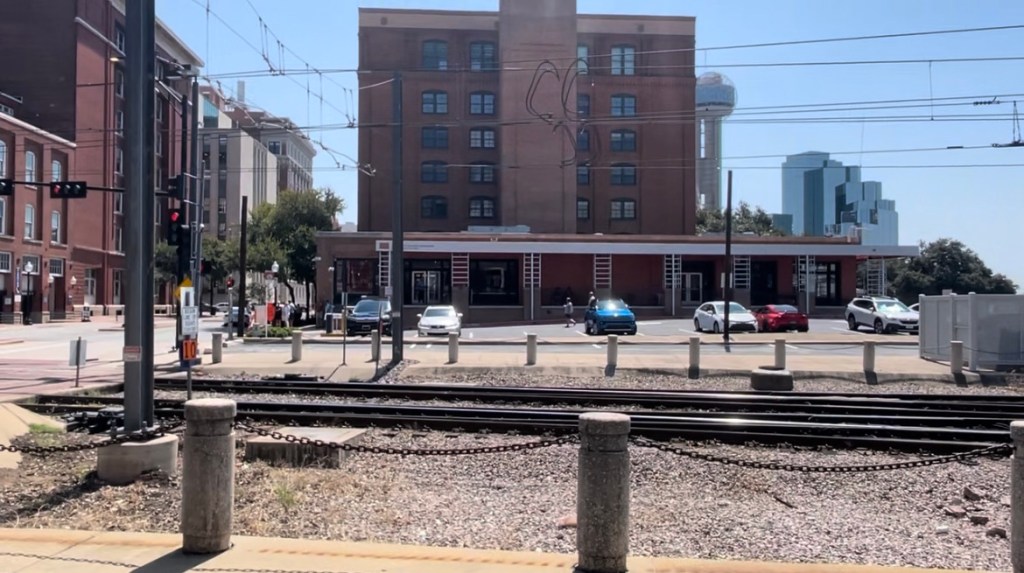
The mainstream version of events has it that after he was confronted on the 2nd floor about 2.5 minutes after the shots, Oswald escaped the TSBD from the front doors. However, if we consider the testimony of James Worrell and Amos Euins, there’s evidence of an alternative version, in which Oswald slipped out swiftly from the back of the building, perhaps 3-4 minutes after the shots, apparently running south down Houston Street. Amos Euins stated in 1964, “[The police] got all the way around the building. And then after that, well, he seen another man. Another man told him he seen a man run out the back. No, sir [don’t know who he was]. He was a construction man working back there.”
It’s very likely Euins heard of Worrell’s testimony somehow, or potentially there was another unknown witness to the running man. Worrell, on November 23, in his affidavit for the Dallas Police said:
“I ran from Elm Street to Pacific Street on Houston. When I was about 100 yards from the building I stopped to get my breath and looked back at the building. I saw a w/m, 5’8” to 5’10”, dark hair, average weight for height, dark shirt or jacket open down front, no hat, didn’t have anything in his hands, come out of the building and run in the opposite direction from me. I then caught a bus to my home.”
An FBI document by SA Louis M. Kelley taken the same day writes:
“He ran to Elm Street from Pacific Street on Houston. When he had run about 100 yards, he stopped to catch he breath and upon looking back, saw a man he described as a white male, height 5’ 8-10”, dark hair, dark clothing, wearing some type of jacket, leave the building where he had seen the gun and start to run in the opposite direction from him.”
The third document was Worrell’s testimony to the Warren Commission in 1964:
“Mr. WORRELL. Well, … I ran down Houston Street alongside the building and then crossed over the street, I ran alongside the building and crossed over, … I was standing over here, and I saw this man come bustling out of this door. … I turned the corner, went right down beside the building on the sidewalk and when I got to the corner… Cut directly across, kind of at an angle. … and I rested there, I was out of breath, … I was there approximately 3 minutes before I saw this man come out of the back door here. … 5-7 to 5-10. … 155 to 165. … the way he was running, I would say he was in his late twenties or middle-I mean early thirties. Because he was fast moving on. … White. … Black. … well I will say brunette [hair]. … Well, see, I didn’t see his face, I just saw the back of his head and it was full in the back. I don’t know what the front looked like. But it as full on the back. … Dark, like a jacket like that. … Sports jacket. … It was dark in color. … and he had light pants. … his coat was open and kind of flapping back in the breeze when he was running. … He wasn’t holding nothing when he was running. He was just running. … Well, when he ran out here, he ran along the side of the Depository building and then when he got-… he went on further. … it was a building [that came in between]. … Oh, no, no [had he gotten a view of his face].”
The last point will become an important anomaly in this case. Toward the end of Worrell’s testimony, Arlon Spectre asked “Mr. Worrell, we have a report of the Federal Bureau of Investigation which contains a purported interview with you, designated at a report of Robert P. Gemberling dated November 30, 1963, which has this statement: “He”-referring to you-“stated that last night when he saw photographs of Lee Harvey Oswald on television he felt this was the person he saw running away from the building. He stated this person did not look back but he was certain this was a while person since he had a profile view.”” This quotation comes directly from the Kelley FBI document dated November 23.
Specter asked Worrell if he had a “profile view” of the man, to which he responded, “No, sir.” Specter then asked if he told the FBI that he had a profile view, to which he responded “No, sir, I sure didn’t.”
Specter also asked “Did you tell the FBI agent who interviewed you, that you felt that this person was Lee Harvey Oswald?” To which Worrell replied, “I don’t know if I did or did not.”
The Warren Commission ran into a problem though. The testimonies of George W. Rackley, Jr. and James Ramock, who apparently had a view of the back of the TSBD, never saw a fleeing man and thus could not corroborate what Worrell saw.
Rackley was about a block away from the back of the TSBD on Houston Street. He heard the sounds of the parade but neither heard shots or saw the motorcade. However, at one point he saw a flock of pigeons flying away over the Trinity building and TSBD. He was looking in that direction for about 10 minutes, both before and after the shooting, and never saw anyone exiting the rear or running south on Houston.
Romack, who was with Rackley north of the TSBD around Houston Street, walked up ahead closer. He did hear three rifle shots, when he was around 100 to 125 yards away from the building. He kept on eye on the back of the building for about five minutes and stated that no one came running out of the building.
Let us finish this subsection off with an examination of Oswald’s clothing. First off, the basic description of Oswald was: white, male; dark brown/black hair, full in the back; 5’9; 168 lbs; 24 years old; white shirt; black pants upon arrest.
This description fit Worrell’s running man very closely: white, male; dark brown/black hair, full in the back; 5’7-5’10; 155-165 lbs; late 20s, fast runner; dark sports jacket; light colored pants. In comparing these, it almost fits perfectly, except for the clothes.
Linnie Mae Randall, who saw Oswald heading for work stated that “Lee was bareheaded, wearing a light brown or tan shirt. I don’t remember what kind of trousers he had on.”
The first description of Oswald that was broadcast by Dallas Police at 12:45pm, likely came from Brennan, was as follows:
“The suspect in the shooting is approximately thirty, slender build, height five feet ten inches, weight one hundred sixty-five pounds, reported to be armed with what is thought to be .30 caliber rifle. Attention all squads. The suspect from Elm and Houston is reported to be an unknown white male about thirty, slender build, five feet ten inches tall, one hundred sixty-five pounds, armed with what is thought to be a 30- 30 rifle.”
This physical description fits Oswald closely, as well as Worrell’s man, but nothing description of the clothing was given. An early description of the man’s clothing did come from Brennan, who stated: “He was a white man in his early 30’s, slender, nice looking, slender and would weigh about 165 to 175 pounds. He had on light colored clothing but definitely not a suit.”
This certainly fits the description of Oswald, except for the age. However, he evidently had on a light colored clothing at the time of the shooting. Amos Lee Euins corroborated Brennan in so far that the shooter’s race was white and was male.
A man named Robert Edwards stated, “I noticed that he had on a sport shirt, it was light colored, it was yellow or white, something to that effect, and his hair was rather short. I thought he might be something around twenty-six, as near as I could tell.” Another man named Robert Fischer saw that the man had on an open-necked shirt.
Another corroboration of these points came from Arnold Rowland:
“This man appeared to be a white man and appeared to have a light colored shirt on, open at the neck. He appeared to be of slender build and appeared to have dark hair.”
Confirming again to the FBI, Rowland stated
“He appeared to be slender in proportion to his height, was wearing a white or light colored shirt, either collarless or open at the neck. He appeared to have dark hair.”
However, the clothing description changed after the shooting. Motorcycle Officer Marrion Baker confronted Oswald on the 2nd floor, some 90 minutes after the shots, stating, “The man I saw was a white man approximately 30 years old, 5’9”, 165 pounds, dark hair and wearing a light brown jacket.” Is it possible then that on Oswald’s way out of the building he had put on a light brown jacket, or had he been wearing a light brown shirt? Robert Reid encounters Oswald soon after Baker. She stated: “When I saw him he was dressed in a white T-shirt and I don’t recall what his trousers were like.”
On the bus, Mary Bledsoe saw Oswald without a jacket and wearing a shirt with a hole at the elbow. The cab driver William Whaley stated that Oswald, “had on a white T-shirt and black pants, and that is all he had on.” He later claimed that Oswald was wearing either the gray zippered jacket or the heavy blue jacket. However, the blue jacket was found in the domino room later that month, so he couldn’t have been wearing it at that time. He did spot a silver bracelet on his left wrist, which Oswald had on when arrested. When Earlene Roberts saw Oswald leaving the rooming house he was zipping up a jacket.
Oswald had ditched the jacket after the Tippit murder and was arrested while wearing a dark brown, long-sleeved shirt. Oswald himself told detective Will Fritz that he went “home by bus [and] changed britches.”
Comparison with Bowers & Knoll witnesses

Now we will examine briefly Worrell’s testimony in the context of witnesses to the Knoll shot, in particular Lee Bowers. One initial point that comes to mind is the fact that Worrell was apparently standing on the Elm Street road heading directly into the parking lot behind the fence/TSBD, where between 11:00-12:30, Bowers saw three cars come in and out of the parking lot just prior to the shots. Worrell should have been in a position to observe these three cars (as many others should have), but he never spoke about seeing them and it does not appear that he was asked.
Another key factor in this regard is that Worrell was very specific that he heard four shots. Several others also heard four, some more, but these were witnesses like Amos Lee Euins who saw the rifle, or Sam M. Holland who was a key Knoll Shot witness. Bowers heard three shots, but felt the second and third shots were too close to have come from the same rifle. This is important, because if there were four shots then there must have been a second gunman, as only three shots were fired from the TSBD.
While Worrell stated the Presidential limousine had past him by as much as 50-75 feet, this could lend weight to the possibility that the first shot was fired later than the official version has it, which could also be consistent with the first shot having hit Kennedy. In any case, a problem arrises in the sequence of shots. Sam Holland maintained the third shot came from the Knoll, whereas Worrell later would claim that he saw the second and third shots fired from the TSBD, then only heard the fourth shot. If his original statement about only having heard the third and fourth shots were accurate, then that would leave open the possibility that the third shot had come from the Knoll. But he also stated the shots sounded right in succession, as opposed to the the third and fourth shots being almost on top of each other.
One key point that very important in comparing Worrell and Bowers’ testimony, comes when the form of the testimony of J.C. Price. Besides his somewhat confusing statement of hearing a volley of five shots, then “maybe as much as five minutes later another one,” which he thought came from the knoll or railroad tracks area, he described seeing a man running from this general area. He described the man as having “a white dress shirt, no tie and kahki colored trousers. His hair appeared to be long and dark and his agility running could be about 25 years of age. He had something in his hand. I couldn’t be sure but it may have been a head piece.”
In an interview with Mark Lane, he elaborated on the path of this running man, “Over behind that wooden fence, past the cars, and over behind the Texas Depository Building.” The first question that was not cleared up would be when exactly this man was running after the shots. Besides that issue, who else saw the running man? Apparently no one described seeing it, even the railroad men and police who came into the area, except perhaps for Police Office Joe Marshal Smith. But the key issue is that the man spotted by Price ran behind the TSBD, directly into the area that both Bowers and Worrell should have had a view on. Yet both men never described seeing a man running from the parking lot behind the TSBD.
A final note I’d like to make here is Worrell’s description of what he saw when the rifle fired the second and third shots. In his Warren Commission testimony, he stated, “I saw what you might call a little flame and smoke. … Same thing, a little flash of fire and then smoke.” This is quite remarkable really, sense multiple knoll witnesses on the Triple Overpass described seeing a puff of smoke come from under the trees and in the case of Bowers, a flash of light. It’s certainly and interesting observation, but no one spotted a rifle or barrel, so it remains a mystery.
Points of interest in the accident

The last subsection here deals with the 1966 motorcycle accident that killed Worrell and his passenger Hudgins. This case is the primarily reason I began to research for this article. The Worrell case was one of a few vehicle involved accidents that resulted in the death of JFK witnesses in Texas. On August 30, 1965, Mona B. Saenz, who was an employment clerk who interviewed Oswald, was struck and killed by a bus, probably in Dallas. Rose Cheramie was run over and killed by a car in Big Sandy, Texas, on September 4, 1965. This two cases involved persons being struck by a vehicle. Both cases were more on the periphery of the assassination, but the Cheramie case was especially intriguing. On December 18, 1965, cab driver William H. Whaley, who drove Oswald from Dallas to his Oak Cliff rooming house after the assassination, died in a head on collision while driving his cab. The rooming house lady herself died from a heart attack on January 9, 1966. Several months later, on August 9, 1966, Lee Bowers, who was the biggest candidate to have seen the Knoll shooter, died when his car drove straight into a concrete bridge abutment near Midlothian. Nearly two months later, on November 5, 1966, James Worrell died in a motorcycle accident. Even between that two month period there were as many as four deaths of individuals connected with the assassination. Among them was Jimmy Levens, a Fort Worth nightclub owner who employed some of the same dancers as Jack Ruby, died on November 4, 1966, apparently of natural causes. Again nearly two months later, on January 3, 1967, Jack Ruby himself died in Dallas while awaiting a retrial in Fort Worth from a rapid onset of lung cancer and a blood clot.
ISGP calculated that with just William Whaley and James Worrell alone, who both apparently saw Oswald with a sports jacket on after the assassination, dying in vehicle accidents, that’s a 0.006% chance of happening, or 1 in 17,000. Adding in Bowers, who like Worrell had a view of the rear of the TSBD, that’s a 0.0004% chance of happening, or in 240,000. With these probabilities in mind, ISGP left open the possibility of foul play of some sort. However, he acknowledges there’s no way of telling for sure.
What isn’t in doubt is that there was a witness, H.E. Cooper, who as far as I can tell never told investigator J.N. Feinglass that he saw another vehicle chasing their motorcycle. Any details from Feinglass would also be helpful. Reportedly the Dallas Times Herald article contained a photo of the wrecked motorcycle, but I have not been able to obtain it.
Any testimony about Worrell and Hudgins would he helpful, such as Worrell’s sister, the Richardsons or even Woody. Darwin Payne had interviewed Worrell for the Time Herald and quote Worrell as stating “I heard four shots. I don’t care what they say.” There’s also said to he an interview of his mother, Jochim, but I’ve not seen it anywhere.
On a final note, it was Judge Joe B. Brown who signed Worrell’s inquest and death certificate. Judge Brown had overseen the trial of Jack Ruby. On February 20, 1968, Judge Brown died from a heart attack at Baylor Hospital in Dallas.
Conclusion
The evidence of foul play in the motorcycle accident of James Worrell is incredibly slim. But placed in the context of the 1965 car accident of Oswald cab driver William Whaley and especially the 1966 car accident of key Knoll witness Lee Bower, it’s at minimum worth a consideration.
I plan to complete the reference and slightly expand this article in the future.
Notes
- *) https://www.findagrave.com/memorial/28079029/james_richard-worrell/photo; *) 1964, Warren Commission, Vol. 2, page 190, link
- 1964, Warren Commission, Vol. 2, pages 190-191, link
- 1964, Warren Commission, Vol. 2, pages 191-192, link
- *) 1964, Warren Commission, Vol. 2, page 192, link *) https://en.m.wikipedia.org/wiki/Timeline_of_the_John_F._Kennedy_assassination
- *) 1964, Warren Commission, Vol. 2, pages 193-195, 198-200 , link *) Nov. 23, 1963, Worrell affidavit, link
- 1964, Warren Commission, Vol. 2, page 195, link
 Conspiracy Dossiers