Author: Carter L. McLellan – Date: September 17, 2024

Contents
- Whaley’s story
- The car accident
Whaley’s story
William Wayne Whaley was born on June 19, 1905 in Sulphur Springs, Hopkins County, Texas, USA, to Lona Haines Elam and Oscar William Whaley. Sulphur Springs is a remote city to the northeast of Dallas. I currently have no information on his education or his life during the following 3 decades.
By the age of 30, Whaley got married to to Nellie Fayne Wilson (1915-1992), on December 6, 1935. By around 1936, Whaley began taxi driving for City Transportation, Co., working from 6am to 4pm, probably living in or near Dallas by this point. On November 17, 1936, Whaley had a daughter, Dixie Charlene Whaley (1936-2011) in Dallas.
In 1940, sometime after military draft registration, Whaley’s birth year changed from 1908 to 1905. His address at that time was 2219 Pine Street, Dallas. Between 1945 and 1946, Whaley was a Navy gunner at Iwo Jima, earning him the Navy Cross. After WWII, he joined the Navy reserve. He then returned to his cab driving career in Dallas, which would have been his occupation through the ‘50s.
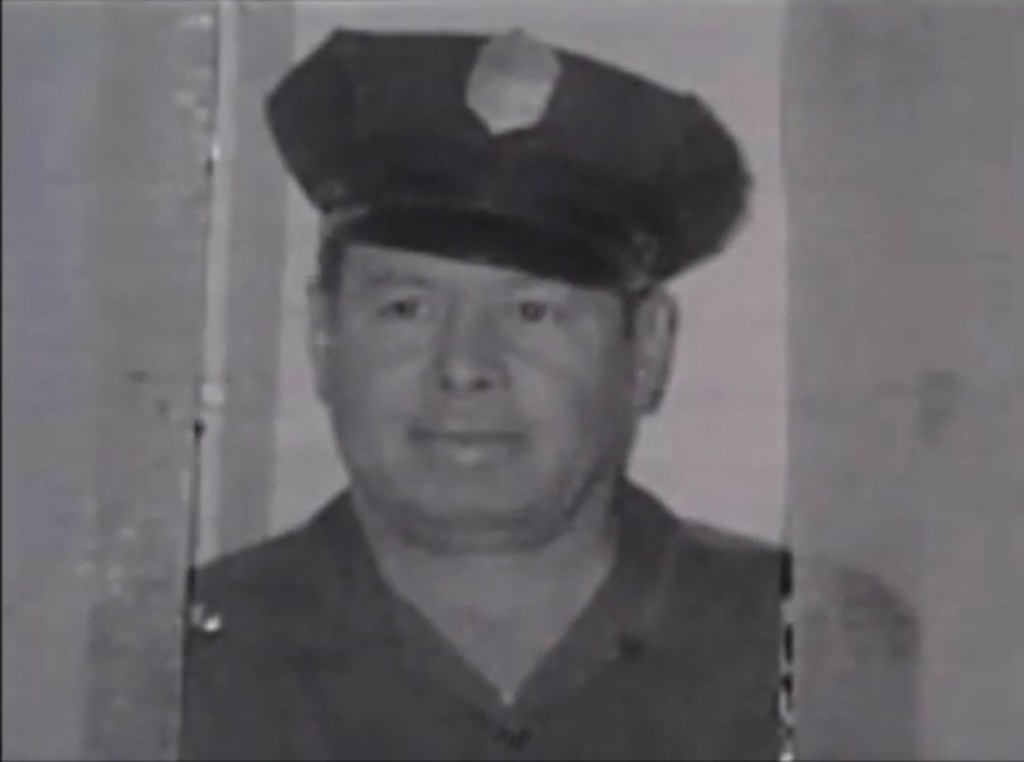
November 22, 1963
By the time of the assassination, Whaley was 58 years old. At the time of the shooting, at 12:30pm, Whaley was standing by his cab, a 1961 Checker, at the Greyhound Bus Station on Lamar and Jackson waiting for a fare.
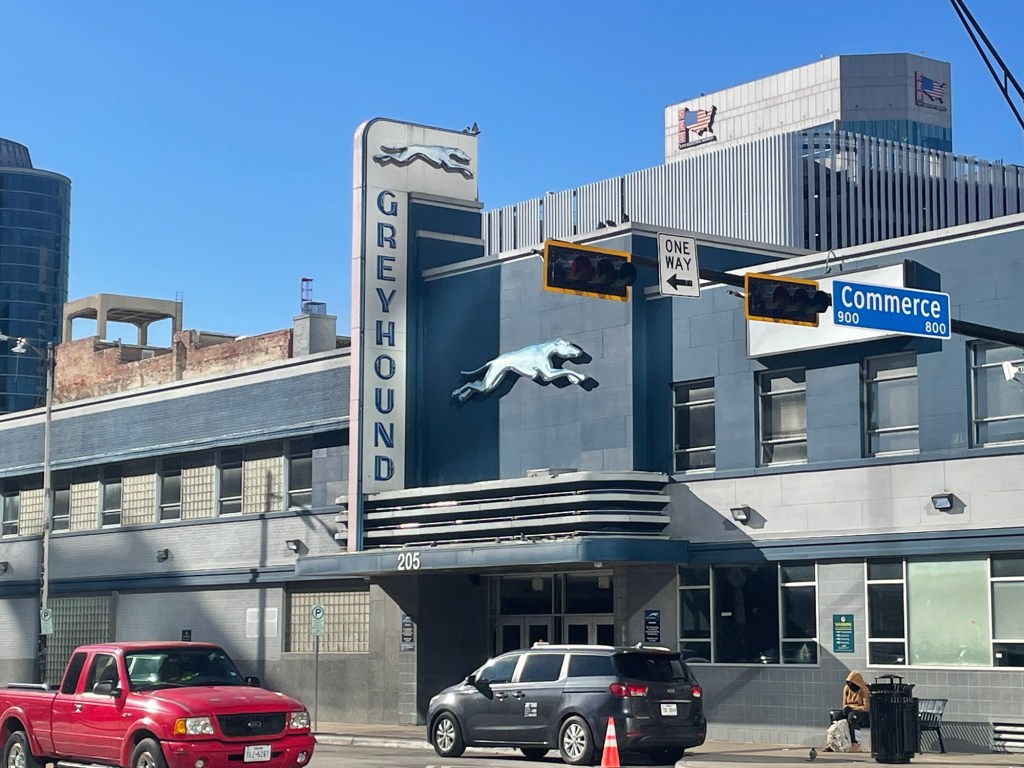
At about 12:48pm, Lee Harvey Oswald came walking south on Lamar to hail a cab. Oswald asked “Can I take this cab?”. Whaley opened the backdoor, but Oswald closed it because he wanted to sit up front. Oswald got in the passenger side and Whaley flipped on the meter, when a lady ran up and asked to have the cab. Oswald cracked the door like he was going to let her have it, but Whaley assured her that there would be another one behind him.
Oswald told Whaley to go to the 500 block of North Beckley in Oak Cliff, just a few blocks down from his rooming house. Starting on their way, Whaley noticed all the sirens and commotion back toward Dealey Plaza, prompting him to ask Oswald what it was all about. He made no comment, so Whaley never spoke again. Whaley turned right on Jackson to Austin, where he turned left. He turned right on Wood Street, then turned left on Houston Street. Went over the viaduct to Zangs Boulevard, then turned left on Beckley and traveled until he reached 500 N Beckley.
Reaching the 700 block of N Beckley and Neches, at 12:54pm, on the west curb, Oswald said this will do. Whaley then dropped off Oswald. The fare was 95 cents, Oswald gave him a dollar and told him to keep the change. Oswald got out and walked in front of the cab on an angle headed south on Beckley. The trip only took nine minutes. Whaley then went on his way.
Whaley’s description included:
- Physical: white, male; small, slender; 5’8; 25-26 years old;
- Clothing: Dark shirt with white spots or something; “brown shirt with a little silverlike stripe on it and he had on some kind of jacket, I didn’t notice very close but I think it was a work jacket that almost matched the pants.”; shirt was open three buttons down; bracelet on left wrist; Pants: blue faded blue color, like a blue uniform made in khaki
The aftermath of the assassination
That following Saturday morning, on November 23, Whaley recognized Oswald on the television news as the man he had given a ride to yesterday. He immediately told his superiors at the cab company. They contact Dallas police, who picked him up and brought him down to City Hall. He met assistant district attorney Bill Alexander, Dallas Police Leavelle and FBI men for a statement. At 12:15pm, Whaley was brought to a lineup or four men and identified the third man at position 2 as the man he had given a fare to the previous day. That man was Lee Oswald, who had bitterly protested against the police that they had been doing him an injustice by the way the lineup was conducted. Whaley’s statement to Dallas police was taken by Public Notary Patsy Collins, the same person who the previous day had taken the testimony of Lee Bowers.
On November 26, 1963, Dallas Morning News journalist Hugh Aynseworth interviewed Whaley. He probably was interviewed by other journalists after this point.
In 1964, Whaley gave important testimony to the Warren Commission. His testimony was crucial in establishing the timing of Oswald’s movements after the shooting and in pinpointing Oswald’s clothing, which became point of controversy. I will delve deeper into these specific matters in the future.
The controversy generated from Whaley stating Oswald had a jacket, like Worrell and Police Officer Marrion Baker. Worrell was opposed by two witnesses who didn’t see the fleeing man out of the back of the TSBD. Whaley was opposed by a bus passenger, Earlene Roberts, and Oswald’s jacket having been found several days later in the TSBD.
The car accident
Whaley continued his career in cab driving, becoming the most senior cab driver in the company. He had moved northwest of Dallas to 619 Pine Street, Lewisville. There hadn’t been a fatal taxi cab accident in the company since 1937 and Whaley had never been in a car accident.
One drizzly Saturday morning, on December 18, 1965, Whaley, now 60, began his shift. He picked up a passenger, fellow Navy Lt. Cmd. Maurice R. Barnes, 32, of Salt Lake City, Utah. Barnes was a navy fighter pilot who came to Dallas for training at the Dallas Naval Air Station, attached to on Navy Reserve Fighter Squadron 703. Barnes was a lawyer with a legal office in Washington, DC. Whaley too was attached to the air wing staff at the Dallas Naval Air Station.
At 8:00am, Whaley was driving south on the Hampton Road Viaduct over the Trinity River, when a driver, attorney John Henry Wells, 83, of 3102 Toronto, apparently crossed the median line causing a head on collision instantly killing Whaley and Wells. Barnes survived the accident but was taken to Parkland Hospital in critical condition. Whaley was brought to Parkland as was there for two hours.
Another driver spotted the scene and pulled into Fire Station No. 36 on Hampton and Denison to inform them of the crash. Battalion Fire Chief J.R. McKim arrived at the scene, where he found his firemen, Wayne Wilkens, who had been in route to Station 36, already assisting Barnes. McKim stated it appeared Whaley and Wells were killed instantly. Sheriff deputies made a statement about the car accident.
Whaley died from multiple head and internal injuries, no autopsy was performed. His death certificate and inquest were signed by JP Joe B. Brown, the same man who oversaw the Ruby trial and who the following year signed the death certificate of James Worrell. (note: might be some confusion as there was a Joe Brown Sr. and Jr.) An autopsy was apparently performed on Barnes, to determine whether he died from the accident or had suffered a fatal heart attack. The author is unaware of the results of that reported autopsy. Whaley is buried at plot 24d, Old Hall Cemetery, Lewisville, Denton County.
Notes
References
- https://texashistory.unt.edu/ark:/67531/metapth339843/
- https://www.jfk-assassination.net/russ/testimony/whaley1.htm
- https://www.jfk-assassination.net/russ/testimony/whaley2.htm
- https://www.jfk-assassination.net/russ/testimony/whaley3.htm
- December 19, 1965, James Ewell for Dallas Morning News, ‘2-car mashup kills Oswald taxi driver: Dallas Man, 83, Also Dies in Crash on Trinity Viaduct’
 Conspiracy Dossiers