Author: Carter L. McLellan – Date: September 26, 2024

Contents
- Introduction
- The life of Jim Koethe and his connection to the JFK assassination
- The unsolved murder of Jim
- Notes
Introduction
The life of Jim Koethe and his connection to the JFK assassination
James Finley “Jim” Koethe was born on July 5, 1934, in Henrietta, Clay, Texas, USA. His parents were Finley Louis Koethe (1904-1972) and Winnie Leola Garrison Wirz (1908-1994), they were in their 30s when he was born. Finley was born in Clay County, while Winnie was born in Hunt County, located northeast of Dallas. (1)
Henrietta is a small city southeast of Wichita Falls. His earliest years would have been spent in the middle of the Great Depression. During WWII, from 1940-1946, he would have been 6-11 years old. By 1950, the Koethe family was living in Seymour, Baylor County, located southeast of Wichita Falls. “Jimmy” graduated from Seymour High School around 1951, 17-18 years old. (2)
In 1952, he started his Freshman year at University of North Texas (UNT) Denton, located northwest of Dallas and Lake Lewisville. He graduated from UNT in 1955, 21 years old, in Arts & Sciences with a journalism major. (3) He began his journalist career at the Denton-Record-Chronicle and moved to the Wichita Falls Record-News in 1955 as a staff writer.
Two years post graduation, Koethe enlisted in the US Army, at Aberdeen Proving Grounds, Md., serving about two years from 1957 to 1959, between the ages 24-26 years old. After serving he returned to the Wichita Falls paper. There he met journalists Bill Hunter and Dan Martin. (4)
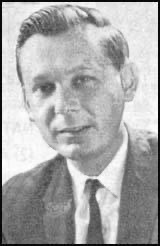
Eventually, Koethe moved to Dallas and became a journalist for the Dallas Times Herald, on April 9, 1962, as a general assignments reporter and feature writer. Dan Martin also came to Dallas and joined the Dallas Morning News. His other friend Bill Hunter moved to Long Beach, California, where he worked as a journalist. One colleague and close friend of Koethe at the Herald, Ben Stevens, remembered that Koethe was a “real outdoor nut” who liked to talk about hunting or fishing and stuff like that. (5)
It was observed that Koethe had somewhat of a nightlife, getting drunk and enjoying to talk to people, including strangers. Time even reported that “Koethe was a beer-drinking bully who liked to hang out with thugs.” It appears that for some time, Koethe had a roommate named Bill Shelton. Friends later observed that through the 1950s and early 1960s, Koethe was never observed having a regular girlfriend or dating any women. (6)
Not much else is really known about Jim’s life before the assassination, so far as I have been able to gather at this point. Likely as a result of his journalism practice, he became acquainted with some prominent Dallas lawyers like Tom Howard, Constine Droby and Jim Martin. Soon, Koethe would find himself with these men in a hotbed of intrigue in Dallas by November 1963. (7)
After the JFK assassination
At this point I have very little information of what Koethe did on November 22, 1963, the day Kennedy was assassinated by Oswald from the TSBD. No doubt, the Dallas Times Herald and other papers were part of the massive surge in reporting immediately after the shooting. Two days later, at 11:21am, November 24, Carousel club owner Jack Ruby shot Oswald to death at City Hall, where a Dallas Times Herald photographer, Robert H. Jackson, captured the moment of the fatal shot. He might have spotted Tom Howard speaking to Ruby after the shooting.
After the assassination, Jim Koethe had reunited with his old pal, Bill Hunter, who came down to Dallas from Long Beach, California, to cover the story for the Long Beach Telegram. That Sunday evening, they looked for the nearest open bar, for a drink. They entered Bill Martin’s TV bar, where Koethe spotted lawyers Tom Howard, C. A. Droby and Jim Martin talking at a table with an unknown out-of-town writer. Koethe and Hunter struck up a conversation with the men.
The lawyers were waiting for George Senator. Ruby’s roomate, to come back after speaking to Dallas Police Homicide Department at City Hall. After four or five hours of interrogation, Senator was released and met the lawyers at the TV bar. Willie Allen, who took the “three tramps” photos was also said to be a part of this group. One of the journalists wanted a photo of Ruby, so it was arranged by Senator for the men to meet at the Ruby-Senator apartment.
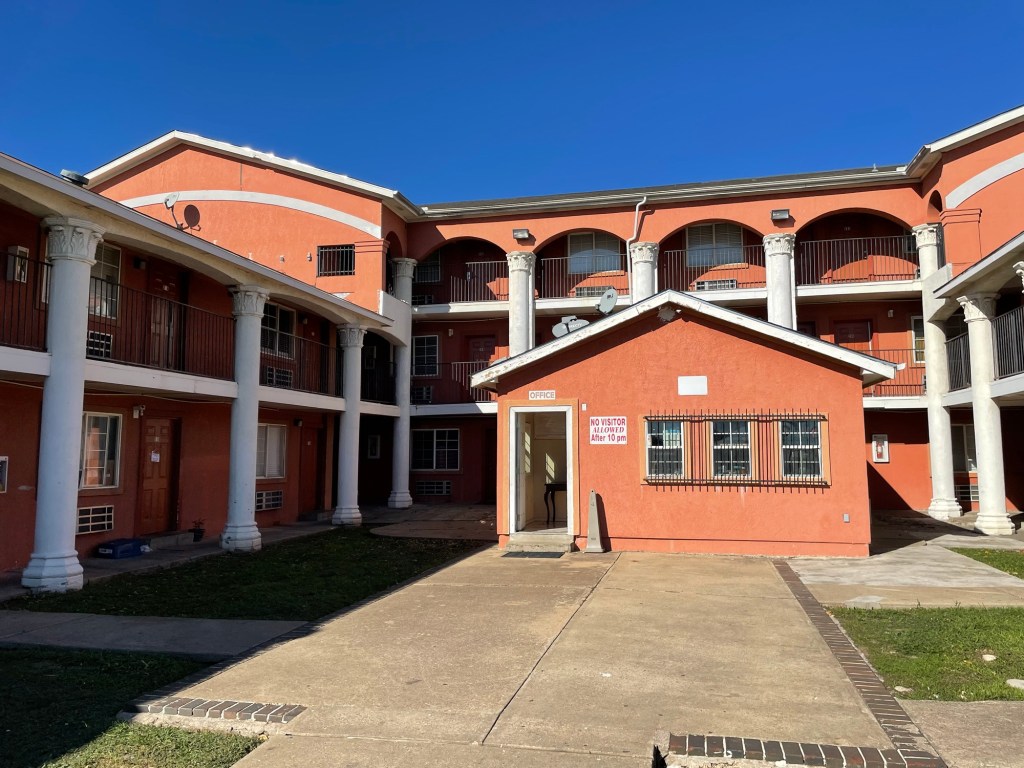
By 8:00pm, with help from Droby, Koethe and Hunter met Senator and Howard at the apartment. They remained there around an hour and a half. Droby observed Koethe write some notes, but he never published anything about the meeting in the Dallas Times Herald. Koethe was said to have seemed unimpressed, and allegedly remarked to colleagues that: “It was just a dumpy apartment.”
They never found a picture of Ruby at the apartment. Droby observed the place had not been ransacked and didnt realize the place had already been searched by Dallas police. The group went to Jim Martin’s for dinner, and George Senator stayed the night at Martin’s, afraid to remain at his own apartment.
The unsolved murder of Jim
Koethe remaining in Dallas parted ways with his old friend Bill Hunter, who returned to Long Beach, CA. Over the following months, Ruby would be going to trial and his lawyers would have been very busy. C.A. Droby even recieved extreme death threats by an anonymous phone caller to his wife. Tom Howard took the job and argued that Ruby had shot Oswald to spare the Kennedy family of a trial.
Another strange occurrence happened on January 23, 1964, when a man attempted to murder Warren A. Reynolds, a witness to the J.D. Tippit murder by Oswald, in his shop garage. He was shot in the head but managed to survive. Soon a suspect in the Reynolds case, Darrel Wayne Garner was given an alibi by a girl named Betty Mooney McDonald, who allegedly claimed to have been a dancer at Jack Ruby’s Carousel Club. McDonald was later arrested for public disturbence with a roomate and later committed suicide, on Febraury 13, 1964, by hanging herself with her trousers in the City Hall jail, the same building where Ruby shot Oswald.
Other deaths occured in the following months to individuals with reported links to Ruby or Oswald. Rumors were circulating of a conspiracy right away, and that Ruby and Oswald had known each other and that Ruby might have been attempting to silence Oswald. Howard ended up leaving the Ruby defense team after falling out with Melvin Belli. On March 14, 1964, Ruby was charged with murder with malice and given the death sentence by Justice of the Peace Joe B. Brown.
Almost exactly five months ater the meeting in Ruby’s apartment, on April 23, 1964, Bill Hunter was fatally shot by a Long Beach police officer in a bizarre accident. Hunter had been sitting at his desk in the press room reading a novel, ‘Stop This Man,’ when two detectives, Creighton Wiggins, Jr., and Errol F. Greenleaf, supposedly friends, entered the room. There was confusion about the story, as one officer claimed he dropped his gun, causing it to discharge when hitting the floor. Later, he changed the story to “horseplay” between the two detectives with their weapons. Whatever the case, a single shot was fired, striking Hunter in the heart. A local newspaper charged the police with a coverup, but Chief William Mooney strongly denied that claim. The two officers were let go or resigned and charged in January 1965 with involuntary manslaughter and sentenced to three years of probation.
At 2am in Dallas, Bill Shelton at the Times Herald was called by his boss the day it happened. He didn’t buy the story of the cop dropping the gun, which turned out to be the case. Undoubtedly, Koethe heard the news and mourned the loss of his friend, but he never spoke to colleagues about it and it is unknown if he connected it to the Ruby case.
More strange deaths would occurr in the following months. A military intelligence agent, Garret J. “Garry” Underhill, who was linked to the CIA, committed suicide at home in Washington, DC, shooting himself in the head, on May 8, 1964. He claimed to New York friends to have special knowledge of a far east CIA conspiracy to kill Kennedy and feared for his life. On May 23, 1964, former Louisiana mayor DeLesseps Morrison, Sr., and Hugh F. Ward died in a plane crash in Mexico. Both men linked to Oswald activity in New Orleans around 544 Camp Street office of Guy Banister, who died from a heart attack on June 6, 1964. Also in New Orleans, Dr. Mary S. Sherman, died in an unsolved murder and apartment fire on July 21, 1964. Life editor C.D. Jackson, who purchased to Zapruder film, died on September 18, 1964.
The murder of Jim
Sometime around late Saturday, September 19, 1964, Jim Koethe was at his apartment, 4115 San Jacinto, apparently taking a shower. When he stepped out of the bathroom, he seemingly encountered a burglar, who possibly after a scuffle proceeded to murder Koethe by either a fatal “karate chop” blow to the neck or strangulation, which resulted in a broken neck bone at the base of the neck.
Several of Koethe’s items, including two rifles, a pistol and his wrist watch were stolen. His wallet was emptied. Allegedly, notes for a book he was supposedly writing about the assassination, allegedly with two other journalists, went missing. Koethe’s car, a British-made Woolsley, likely the only one of its type in Dallas, was stolen. A motorcycle policeman later found it abandoned at 4300 Victor Street, several blocks from the apartment, near Buckner Park at Worth and Caroll. Fingerprints were unable to be found at all, not even Koethe’s.
By the following Monday, Koethe’s boss at the Dallas Times Herald, Paul Rosenfield, noticed that he had not shown up for work. So he made a phone call to Koethe’s landlady to check up on him. What she found startled her and she made a frantic call to the Dallas police. Homicide Detectives Charles Dhority and E. R. Beck found the apartment in disarray and Koethe’s body on his bedroom floor wrapped in a blanket. His body was transported to Parkland Hospital.
The cause of death was initially unclear, as there had been no visible wounds, except for a few minor bruises or discoloration, with blood from his nose and mouth. But an autopsy found that Koethe’s neck had been broken, apparently by a “single karate-style blow” to the throat. There were however signs of strangulation or asphyxiation. The motive was suspected to have been a simple case of robbery, but Koethe’s parents were said to have suspected other reasons. On September 22, 1964, Koethe was buried in his hometown, Masonic Cemetery, Seymour, TX.
The investigation
A number of friends and colleagues were concerned with the case. Koethe was the first of four unsolved murders of journalists at the Dallas Times Herald, between 1964 and 1976. Paul Rosenfield, editor of the Dallas Times Herald, was concerned with the case after finding out about it. Both Rosenfield and Keith Shelton were eager for an early arrest. George Carter, a veteran senior police reporter at the paper, pressed hard for information from the Dallas police and Captain Will Fritz, who was heading the homicide investigation.
Ben Stevens and one or two other staffers who had been friends of Koethe went out into the field looking for answers. For more than a week, they visited places Koethe had frequented, such as bars and beer joints, asking if anyone knew the man or had any information. They were particularly focused on trying to establish where Koethe had been the Saturday night he died and whom he might have talked to. Stevens, reasoning with Koethe’s interest in the outdoors, speculated that Koethe might have told someone about his guns, who then may have wanted to steal them. But their investigation turned up no leads.
Journalist Joachim Joesten was investigating the Kennedy assassination and Ruby murder of Oswald. He interviewed lawyer Constine Alfred Droby about that meeting at Ruby’s apartment and asked if Koethe had seen anything of interest. Droby, folding his hands and leaning foreword, responded that “Koethe’s murdered. He was choked to death to Monday before last.” Droby certainly seemed suspicious over the case.
A break in the case occurred over a week (some reports say some months)after the murder, when on September 27, an ex-convict from Alabama named Larry Earl Reno, 23, was arrested in an unrelated incident and discovered to have been in possession of one of Koethe’s missing guns, or was selling some of Koethe’s stolen personal affects. Reno was held on suspicion of murder. He was also charged with burglary of a parked car and stealing a $200 tape recorder.
Captain Will Fritz said Reno was unemployed from Mississippi and had been nabbed by Detectives G. R. Boyce and Bob Pope in an alley near Gaston and Fitzhugh after a 24-hour search. They also arrested a 17-year-old girl at a nearby Gaston Avenue hotel, who had arrived in Texas with Reno from Alabama. She was taken to County Juvenile Home.
It was also reported that Fritz indicated that Reno had admitted drinking beer with Koethe at his apartment on Friday night, September 18. Reno spoke of meeting Koethe in taverns near Peak and Bryan a “good while back.” Reno knew Koethe for about a year. He also admitted to accompanying Koethe on several occasions to Koethe’s apartment. He said Koethe drove him back home from the apartment after staying for about 15 minutes before dawn on Saturday. Reno denied killing Koethe.
Reno told police he was free on an appeal bond after being sentenced to two years for burglary of a drive-in grocery here.
Reno had reportedly lived on Junius, several blocks from Buckner Park, nearby where Koethe’s car was found, and Reno had bought a used car for cash shortly after Koethe was killed.
The Monday Koethe’s body was found, Reno hitchhiked to a Birmingham, Alabama, suburb. After visiting relatives there, he returned to Dallas by bus Sunday with the girl. He got a fugitive warrant for leaving Alabama while on probation for a burglary conviction.
Reno’s cousin seamstress Mrs. Lena Genomia Lee, 48, of 49-15 Junius was arrested as an accessory to murder. Apparently some of the missing items in question were located in her place. The trial was set to he heard by JP Judge Joe Brown Jr. She claimed to be unaware of why she was involved and was eventually let off. A man named Sidney Earl Perry was allegedly nabbed in Florida as an accessory and accomplice of Reno but was eventually no-billed.
Quite curiously, Reno’s lawyers became Mike Barclays and Jim Martin, the same Martin who had been a part of the entourage that met at the Ruby apartment. As the case against Reno was being prepared by DA Henry Wade’s office, some strange undercurrent began to develop. Ben Stevens, who was assigned to Wade’s office as the courthouse reporter and who knew the lawyers Martin, Droby and Howard, quickly picked up on the developments. Some people in the DA’s office started saying that it was looking more and more like a “queer deal.”
Stevens told friends that it was said that some of Koethe’s relatives were pressing the DA’s office to drop the case against Reno to keep from embarrassing the family. Stevens was outraged at the idea, affirming Koethe was not a homosexual. Others close to Koethe agreed.
Dan Martin, who knew Koethe in Witchita Falls and Dallas, a former Dallas Morning News reporter and later Baptist minister in Penland, North Carolina, says, “I never remember him doing anything that didn’t seem totally straight to me.”
Bill Shelton says, “All this stuff about Jim being gay was just bullshit. I know because I lived with the guy for a while.”
However, none of Koethe’s friends from the 1950s and 1960s remember him having a regular girlfriend or even dating a woman. At the time, being homosexual could cost someone their job or entire future. Therefore if Koethe was homosexual, he would have gone through great lengths to conceal it
When the Reno case came before the grand jury, District Attorney Henry Wade allegedly had secretly instructed the jurors not to indict. Evidence against Reno was highly circumstantial at best. The prosecution didn’t push as hard as it might have for an indictment. The grand jury returned a no-bill for the murder charge of Koethe and burglary of a car and theft of the tape recorder. Reno was cleared, but for the time being he was kept in jail on a previous charge.
Attempts by Reno’s attorney Barclays to free him before Christmas failed. He was being held in the Dallas County jail on a burglary charge and fugitive warrant from Alabama. JP Charlie T. Davis agreed to reduce the bond from $2,500 to $1,000. When he posted the bond on the burglary charge, the Dallas police request the Sheriff department to hold Reno for further investigation by police.
By January 1965, Reno was sprang from jail. In less than a month, Reno was arrested again and charged with robbery and attempted murder of a Wynnewood Hotel, hotel clerk in Oak Cliff, on January 24. This time the prosecution, led by a one-time law partner of Jim Martin, had no qualms about getting an indictment, and a conviction. Reno was sentenced to life for the hotel robbery and attempted murder. At the trial his lawyers called no witnesses in his defense. Requests for rehearing in 1966 were overrule by Judge Roberts. There was some movement in the Reno case by 1972. One source indicated that a “Larry Earl Reno” was being held in Talladega, Alabama and set for release on July 19, 2018.
Notes
- *) https://www.findagrave.com/memorial/28497810/james-finley-koethe *) https://www.findagrave.com/memorial/28498201/finley_louis_koethe *) https://www.findagrave.com/memorial/136788741/winnie_leola_wirz
- https://www.findagrave.com/memorial/28497810/james-finley-koethe#view-photo=177718854
- *) https://www.findagrave.com/memorial/28497810/james_finley-koethe/photo#view-photo=177720004 *) https://www.findagrave.com/memorial/28497810/james_finley-koethe/photo#view-photo=177719555
- *) https://www.findagrave.com/memorial/28497810/james-finley-koethe; “U.S. Army: 1957 -1959”; *) 1993, Bill Sloan, ‘JFK: Breaking the Silence’, pages 68-80, “I knew Jim both in Wichita and then in Dallas,” says Dan Martin, a former Dallas Morning News reporter and now a Baptist minister in Penland, North Carolina…”; *) September 1, 2017, Press-Telegram, ‘What’s Hot: Long Beach reporter Bill Hunter was in the midst of the JFK conspiracy,’ “Bill Hunter was born in Wichita Falls, Texas, and he had friends in Dallas. … “Hunter was in Dallas, where he found an old reporter pal of his, Jim Koethe. Koethe had worked with Hunter in Wichita Falls and had gone on to work for the Dallas Times-Herald.” *)
- *) ibid. *) 1993, Bill Sloan, ‘JFK: Breaking the Silence’, pages 68-80, “Jim was a real outdoor nut,” [Ben] Stevens mentioned at one point. “He liked to talk about hunting and fishing and stuff like that, and the drunker he got, the more he talked, even to total strangers.”
- *) ibid. *) ibid. “It is only fair to note, however, that none of Koethe’s friends and acquaintances from the 1950s and ‘60s can remember him ever having a regular girlfriend or even dating a woman. This was a time when being revealed as a homosexual could have cast an individual his career and his entire future. It follows that if Koethe did have homosexual tendencies, he would have gone to great lengths to conceal them..”
- Ibid., “Almost immediately, Koethe spotted three lawyers of his acquaintance- C. A. Droby, Jim Martin and Tom Howard, all three men who had done legal work for Jack Ruby in the past-…”
References
- https://isgp-studies.com/misc/death-list/articles/1960s_70s_Jack_Ruby_Tom_Howard_Sam_Giancana_Johnny_Roselli_Jim_Koethe_Bill_Hunter_deaths
- https://www.jfk-assassination.net/death11.htm
- https://youtu.be/HJMttVb3ghQ
- https://youtu.be/2vyHydvqfRQ
- https://youtu.be/vhM1YNkcBII
- https://law.justia.com/cases/texas/court-of-criminal-appeals/1966/39639-3.html
- https://law.justia.com/cases/texas/court-of-criminal-appeals/1972/45243-3.html
- https://texashistory.unt.edu/ark:/67531/metadc966760/m1/3/
- https://educationforum.ipbhost.com/topic/10430-larry-earl-reno-and-jim-koethe/
- https://www.inmateaid.com/inmate-profiles/larry-reno-2290517
- https://spartacus-educational.com/JFKkoethe.htm
 Conspiracy Dossiers