Author: Carter McLellan – Date:
Contents
- Introduction
- Origins and History
- Connections to the JFK assassination
- Ties to other events
- Conclusion
- Appendix A: Key Events Timeline
- Appendix B: Key Figures
- Notes
Intro
The CIA’s Miami station in the 1960s was known as JM/WAVE, which became one of its largest offices outside of Langley, Virginia. Located less than 200 miles from Cuba, it was the nerve center for covert operations and intelligence gathering against Fidel Castro, who came to power in 1959 after overthrowing Cuban President Fulgencio Batista.
At the height of the Cold War, US leaders viewed Castro as either a communist or dangerously aligned with the Soviet Union. In response, the Eisenhower administration began planning his removal, a project that continued under President Kennedy. By 1961, the JMWAVE Miami station was formally established as the nexus for anti-Castro operations, which was known as Operation Mongoose, a covert program aimed at destabilizing and ultimately overthrowing Castro.
The CIA recruited anti-Castro Cuban exiles and figures from organized crime, both of whom had lost power in Cuba under Castro’s rule. The alliance resulted in multiple assassination attempts on Castro. However, the failure of the Bay of Pigs in April 1961, combined with President Kennedy’s refusal to authorize full-scale US military intervention, created deep resentment among anti-Castro forces and certain CIA figures responsible for training and preparing them. Meanwhile, Attorney General Robert F. Kennedy aggressively pursued the Mafia, further straining relations between the Kennedy administration, intelligence agencies, and organized crime. As a result, the Kennedy brothers made powerful enemies, some of whom viewed them as too soft on communism and hostile toward the interests of big business and intelligence circles.
Following the assassination of President Kennedy in 1963, the Johnson administration began to scale back anti-Castro efforts, leading to a gradual decline in JMWAVE’s influence. However, during its peak, the Miami station played a key role in Cold War geopolitics, shaping US covert action strategy. Some researchers and writers have even suggested that figures within JMWAVE may have played a key role in Kennedy’s assassination.
Key themes surrounding JMWAVE that this article will touch on include alleged CIA-backed coups and assassination plots, including attempts on Castro; the assassination of President Kennedy and its possible connections to JMWAVE; as well as other possible intelligence-linked “Strange Deaths” and coups, such as assassination attempts on French President Charles De Gaulle, Operation Gladio’s ‘strategy of tension,’ and other reported foreign coups.
Origins and History
Prior to 1800, Cuba had been a colony of Spain and offers by the US to purchase or annex the island never made it through. It wasn’t until after the Spanish-American War and Treaty of Paris of 1898 that Cuban finally gained independence from Spain, but the US maintained military rule of the island until 1902. Despite that there would be several military interventions in the following decades.
Over that time, US companies developed strong commercial interests on the island. President Calvin Coolidge visited Havana in 1928 for the Sixth International Conference of American States. In 1933, Cuban President Gerardo Machado was overthrown by Cuban rebels leading to the Presidency of Ramon Grau, whose regime was described by Ambassador Summer Welles as “communistic” and “irresponsible”. In 1933, Fulgencia Batista led a coup to overthrow Machado, which succeeded and led to a succession of interim presidents. In 1940, Batista defeated Grau in an election, serving as President of Cuba from 1940 to 1944. American business interests grew and American organized crime also started to gather in Havana.
Under Batista, Cuba developed close ties with the United States, even entering WWII on the side of the Allies in 1941. In 1944, Batista’s handpicked successor was defeated by Grau, after which Batista lived in the United States, staying at the Waldorf-Astoria in New York City and a home in Daytona Beach, Florida. Staying in politics, he was elected to the Cuban Senate in absentia in 1948. It has been reported that the newly established Central Intelligence Agency (CIA) began watching Fidel Castro as far back as 1948. At that point, Castro had become a left wing militant activist.
Batista returned to Cuba where he formed the United Action Party and unsuccessfully ran for President. He again ran for President in 1952, but behind in the polls, staged a military coup to seize power, which was planned in Florida. He ousted the outgoing President Carlos Prio Socarras and cancelled the elections. His government was quickly recognized by the Truman administration. During Batista’s second term, from 1952 to 1959, he solidified ties with the wealthy elite and United States, severed diplomatic relations with the Soviet Union, suppressed trade unions and persecuted Cuban socialist groups.
The Cuban economy at that time was almost completely dominated by the US and Havana became a popular sanctuary for American organized crime figures, such as Meyer Lansky, Santos Trafficante and others, who controlled the drug, gambling and prostitution businesses. But these practices led to unrest, with Fidel Castro and Che Guevara starting a revolutionary movement in 1953 that engaged in protests and guerrilla warfare between 1956 to 1958. It was in the late 1950s that the CIA began to gather more intelligence on Castro, who also gain the attention of news outlets as the New York Times.
Reports even indicate that the US began to turn on Batista, and the CIA began to support Castro’s revolution by sending him guns. Apparently, the CIA was asked by their “mob friends to get rid of Batista in Cuba who was shaking them down more than usual… unfortunately, one of out people put Fidel Castro forward as a brilliant reformer.” Frank Sturgis, of Watergate fame, even claimed that he had sent guns and paramilitary trained men to Castro. Jack Ruby was alleged to have participated in sending arms to Castro. Though the US began to fear that Castro was a socialist, by then it was too late.
The rebels defeated Batista’s forces in a battle at the end of 1958, which was followed by Batista’s resignation at the beginning of 1959. Batista fled to the Dominic Republic and Castro came to power becoming Prime Minister of Cuba in February 1959. Castro would not only kick out the mafia and send pro-Batista Cubans into exile, he proceeded to nationalize all the assets of American corporations, which included oil refineries, sugar and fruit plantations, power companies and telephone networks. By December 1959 plans were being made by the Eisenhower administration of ways to overthrow Castro.
The first Miami station
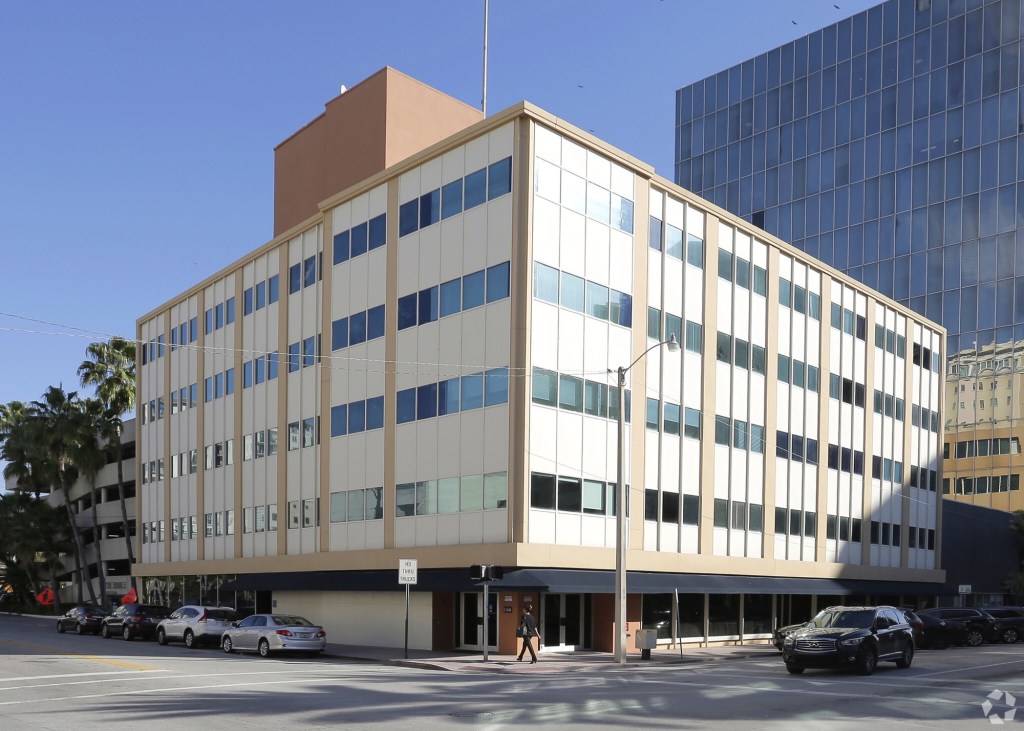
Beginning in January 1959, as part of the Domestic Contacts Division in the Directorate of Intelligence, the CIA set up a Cuba listening post in Miami, Florida. The overt office was located at 299 Alhambra Circle, Coral Gables, and headed by Justin F. “Jay” Gleichauf.
By March 1960, US leadership decided that Castro needed to be displaced, but also felt the need to keep this foreign policy concealed from the UN. On March 17, 1960, President Eisenhower signed off on Deputy Director for Plans Richard M. Bissell, Jr.‘s CIA paper titled ‘A Program of Covert Action Against the Castro Regime‘ (JMARC). The Presidential order authorized the agency to:
- Create an organization of exiled Cubans to manage opposition programs
- Begin a propaganda offensive
- Create an intelligence gathering network inside Cuba
- Develop a paramilitary force to be sent into Cuba to organize, train and lead resistance groups
The CIA’s estimated budget for the program as around $4.4 million. In order to secure financial backing, the “Bender Group” was developed as an organization that would provide American businessmen a secret avenue through which to trade with Cuban groups. The agency began to acquire large amounts of real estate for the project. The Bender Group came to an agreement with the newly founded Frente Revolucianario Democratici (FRD) on May 11. The FRD’s paramilitary branch was Brigade 2506, which was led by Manuel Artime and Pepe San Roman with support from the Alabama Air National Guard.
A base of operations was established in Miami, on May 25, by using a New York career and development firm and a Department of Defense contract as covers. The CIA also obtained safe houses all over Miami for different operational purposes. Gleichauf was met by a CIA colleague from the Clandestine Service to open the Western Hemisphere Division’s new Forward Operating Base (FOB), a covert office also located in Coral Gables named JM/ASH. The new arrival’s duties were to coordinate ”all support, training and preparatory activities for operations against Cuba.”
Between March to August, 1960, the CIA had plans to undermine Castro’s appeal by sabotaging his speeches. On June 15, 1960, a communications stations was established by using an Army operation as cover. The propaganda offensive involved radio broadcasts and the distribution of leaflets. Reports indicate that a meeting took place in August 1960 between Bissell and Sheffield Edwards, Chief of Inspection and Security, with regards to the proceeding with the program.
In September 1960, Director Allen Dulles and Richard Bissell had initiated talks through Robert Maheu with leading mafia figure Johnny Roselli and Sam Giancana with regard to overthrowing Castro. Meetings were held at the Fontainblue Hotel in Miami, and then Santos Trafficante was soon also brought in. Meanwhile, Bob Reynolds arrived to head the covert office, JMASH, remaining there for a year.
John F. Kennedy, as President-Elect, was briefed about the JMARC proposal by Dulles and Bissel in November 1960. Kennedy was surprised at the scale of the operation and consulted with the Joint Chiefs of Staff. Kennedy became President of the US in January 1961. In March, 1961, Kennedy had requested that Bissel scale back the proposal, the revised plan becoming known as Operation Zapata.
With the invasion plan having been approved, Brigade 2506 launched the Bay of Pigs invasion in April 1961. The invading force met stiff opposition and as the international community found out about the invasion, President Kennedy decided to withhold further air support. The invasion failed after the three days and Kennedy took full responsibility.
In the aftermath of the Bay of Pigs, Kennedy was frustrated with the CIA and issued two National Security Action Memorandums No. 55 and 57, which scaled back the paramilitary capabilities of the agency. He also would later force the resignations of Director Dulles in November 1961, Deputy Director Charles Cabell in January 1962 and Director of Plans Bissell in February 1962. These men’s replacements were John McCone as Director, Marshall Carter as Deputy Director, and Richard Helms as Deputy Director for Plans. In May, 1960, the CIA proposed a new program aimed at sabotage and terrorism against civilian and military targets in Cuba. It was at this time that Project ZR/RIFLE was initiated, which would be headed by William K. Harvey of the CIA, with the main purpose of researching assassination techniques and break-ins. The program was initially aimed at Patrice Lumumba of the Congo, but after he was assassinated in January 1961, it was applied to Castro. It was also reported the program to employ the mafia in this effort had ceased shortly after the failed invasion.
JMWAVE, 1961-1968
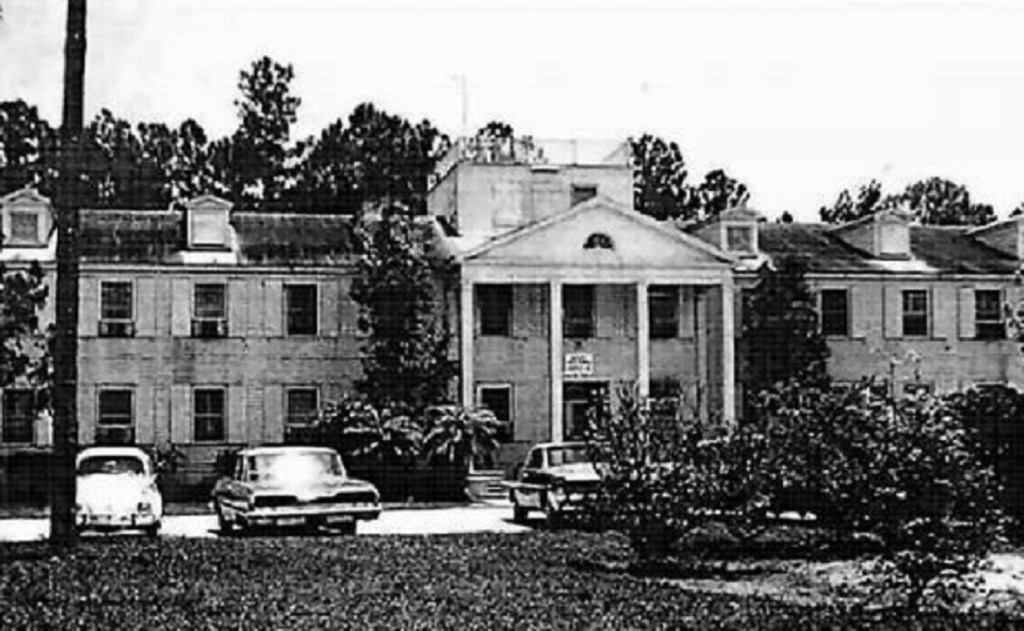
Around September 1961, the covert office JMASH was expanded. It’s outgoing head, Bob Reynolds, arranged to relocate the covert office from Coral Gables to the old Richmond Naval Air Station, located at the University of Miami’s secluded South Campus. Reynolds was succeeded by Robert K. Davis, who became Chief of Station of the new covert office that became known as JM/WAVE. Davis had previously been station chief in Guatemala, where he had participated in the 1954 overthrow of President Jacobo Arbenz Guzman, an operation known as PBSuccess. He was also likely present when Arbenz was assassinated in 1957 and succeeded by Miguel Ydigoras Fuentes.
The 5412 Special Group, which was a body that reviewed and approved covert action programs, was established during the Eisenhower administration in 1954. The group, in late 1961, included CIA Director John McCone, National Security Advisor McGeorge Bundy, Alexis Johnson of the State Department, and General Lyman Lemnitzer of the Joint Chiefs of Staff. In November 1961, this group became known as Special Group (Augmented) (SG-A), because Attorney General Robert F. Kennedy was brought in to chair the group, along with the addition of General Maxwell Taylor. Unofficial members included Secretary of State Dean Rusk and Secretary of Defense Robert McNamara. The group decided on a covert action program for sabotage and subversion against Cuba, which became known as Operation Mongoose, which was to be headed by General Edward Lansdale, who then selected William Harvey to head up Task Force W at the CIA. The operational headquarters became the JM/WAVE station in Miami, then headed by Robert K. Davis.
In February 1962, Davis left his position as chief of the JMWAVE station. After that point relations with the overt office in Coral Gables deteriorated and the covert station suffered from leadership and organizational problems. In March 1962, President Kennedy rejected Operation Northwoods, a paper which made recommendations on false flag operations in the US to help sell an American invasion of Cuba to the American public. General Lemnitzer was fired by Kennedy for supporting the paper.
In December 1961, Bill Harvey had sent his Berlin protege Ted Shackley to Miami, shortly there after becoming Deputy Chief of JMWAVE station. In April 1962, Shackley became Chief of the Miami station during its peak of activity.
Over the next six months, the JMWAVE station would have been focused on preparation for the planned end result of Operation Mongoose in October 1962. In May 1962, Harvey had taken over as case officer for Johnny Roselli, the mob figure who had been tasked with carrying out the failed assassination attempts on Castro.
In October 1962, during the Cuban Missile Crisis, after Bobby Kennedy instructed CIA Director McCone to halt all covert operations against Cuba, Harvey had been approved by the Joint Chiefs of Staff to send three commando teams into Cuba to prepare for the invasion. Bobby was furious at Harvey for this and had him relieved of the ZRRIFLE project by February 1963. Bobby also ordered a major crackdown on anti-Castro training camps, guerrilla bases and commando sorties. In November 1962, Operation Mongoose was disbanded.
The anti-Castro Cubans and the CIA figures who trained and supported them were furious. The mafia, whom were being heavily targeted were furious. FBI Director Hoover had even denied the existence of the mafia, until Bobby forced him to admit it. President Kennedy had gone after the US Steel monopoly and was looking at banning the Oil Depletion Allowance. Kennedy had opposed fascist dictators and was open to certain socialist or left wing governments, which the CIA had opposed. In short, President Kennedy made many powerful enemies.
While the Kennedy administration had cracked down anti-Castro operations and began working to reproachment with Castro, anti-Castro operations had persisted to some extent. What exactly was going on at JMWAVE-post the Cuban Missile Crisis is not particularly clear. We do know figures in the station participated in Operation Tilt, in June 1963, to pick up two alleged Soviet defectors. Whatever the case, thirteen months later, on November 22, 1963, President Kennedy was assassinated in Dallas, Texas, resulting in LBJ assuming office. The alleged assassin, Lee Harvey Oswald, was shortly thereafter assassinated by Carousel club owner Jack Ruby.
President LBJ immediately established the Warren Commission to investigate the assassination. One of the committee members was Allen Dulles and it would conclude that the assassin was Lee Harvey Oswald who acted alone. By early April, 1964, SGA ordered the end to sabotage operations against Castro, although Cuban operations had apparently persisted to some extent.
In June, 1964, the first major JMWAVE leak occurred when David Wise and Thomas B. Ross for Look Magazine publish an article exposing JMWAVE’s Zenith front company. It changed its name to Melmar as a result. In 1965, the CIA’s Western Hemisphere division reassumed charge of the JMWAVE station. Shackley left his post as station chief in June 1965, later becoming station chief in Laos.
The JMWAVE station chief become John Dimmer, who remained in that position from June 1965 to March 1967. Dimmer, while station chief in Berlin, had participated in the investigation of Oswald and help discredit authors on the Kennedy assassination. He had also reportedly overseen sabotage operations against Castro and participated with the FBI in surveillance targeting MLK.
The JMWAVE station in 1968 began to be deactivated. Reportedly, Paul Henze served as station chief briefly that year, followed by Jake Esterline, serving as station chief from 1968 to 1972. The covert office, increasingly obsolete and at risk of becoming a public embarrassment for the University of Miami, was relocated to a substantially smaller station at Miami Beach, in 1968. Cuban operations were gradually terminated by 1972 to 1973.
Connections to the JFK assassination
Perhaps the most intriguing and sensational aspect of JMWAVE is the suspicion of its connection to, or involvement in, the assassination of President Kennedy on November 22, 1963. We’ve already established the pertinent role of the Miami station in assassination attempts on Fidel Castro through the 1960s, as well as the fact the the station was expanded following the failed Bay of Pigs invasion.
We’ve also touched on the fact that key personnel from the beginning had prior experience with running coups, specifically in Guatemala with the overthrow of Jacobo Arbenz in 1954 and the assassination of his successor, Carlos Armas, in 1957. Notwithstanding the experience of CIA leadership, this certainly is evidence that if the JMWAVE station was involved in any way in a domestic coup to assassinate President Kennedy, they certainly had the prior experience to carry it out.
Connections to Oswald
The quickest way to understand the relevance of JMWAVE to the background of the JFK assassination is to be aware of its connection to the accused assassin, Lee Harvey Oswald. This is the best starting point and present a solid foundation for which to base on further inquiry on.
The various intriguing connections of Oswald primarily overlaps between New Orleans and Dallas. Oswald was born in New Orleans, Louisiana, in 1939. During his youth, he moved from New Orleans to Dallas and Fort Worth, Texas. He lived in New York for a period, then moved back to New Orleans. One of the early connection happened here in 1955, when Oswald joined the Civil Air Patrol (CAP) in New Orleans. Although he was only part of the organization for a brief period, and was only about 15 to 16 years old, he allegedly met David Ferrie at that point. He then moved back to Fort Worth, seemingly developed an interest in socialism and then joined the Marines by 1956.
While Oswald was in the Marines, he further developed is far left beliefs and began to be interested in Russia. By late 1959, Oswald obtained a hardship discharge and traveled behind to the Soviet Union, where he essentially became a ‘defector.’ It was at this point that Oswald had apparently gotten the attention of the CIA. Oswald remained in the Soviet Union until June 1962, when he returned to the US with his Russian wife, Marina, first settling with his brother in Fort Worth. Immediately, Oswald was on the radar of the FBI.
Oswald also developed a connection to the white Russian emigre community in Fort Worth and Dallas. He soon came into contact with George de Mohrenschildt, who maintained a relationship with the Oswalds for about seven months, from September 1962 to April 1963. During that period in the final month, Oswald allegedly attempted to assassinate General Edwin Walker in Dallas. In February 1963, De Mohrenschildt had out the Oswalds in contact with Ruth and Michael Paine. Additionally, Ruth Paine’s mother-in-law was a close friend of Mary Bancroft, a love of Allen Dulles. De Mohrenschildt was also a member of the Dallas Petroleum Club and Dallas Council on World Affairs.
These connections are important to remember as Oswald returned to New Orleans, from April to September 1963. It was in this period that a number of highly intriguing developments occurred. One of the first people Oswald went to was his aunt’s family, Liliane and Charles “Dutz” Murret. Some reporting alleges that Murret was a “bookie” for Sam Saia, a gambling kingpin and sidekick of Carlos Marcello. This same reporting alleges that, at some point in this period in New Orleans, Oswald worked for Saia as a runner at the Felix Oyster House. One alleged quote of Marcello has him confirming this reporting. This connection to Marcello is significant, as Marcello had reportedly been pulled into the CIA relationship with the mafia against Castro. It also is significant when examining Oswald killer, Jack Ruby and his alleged mafia ties.
The one job Oswald is known to have held in New Orleans was at the Reilly Coffee Company, where he worked from May to July. This was an intriguing employer for Oswald, because connections of the Reily family. H. Eustis Reily and William B. Reilly, who supported the Crusade to Free Cuba Committee to fund the Cuban Revolutionary Front (CRC), and certainly by 1965 were donating to the Information Council of the Americas (INCA).
After Oswald was fired from his job at Reilly, he began to really pick up on his pro-Castro activism. What remains one of the most unexplained actions Oswald took, was the fact that he put the 544 Camp Street address on some of his FPCC pamphlets. This locations had been linked to the Guy Banister, a highly intriguing fellow in the JFK saga. Banister had previously had an office at the nearby Balter Building, where Sergio Arcacha Smith had set up a New Orleans chapter for the CIA-backed FRD. After the CRC took over the organization, they relocated to 544 Camp Street for a while. In the early 1950’s Banister set up the Anti-Communism League of the Caribbean, which involved Maurice Brooks Gatlin and Felix Rodriguez, a later top-CIA assassin involved in Brigade 2506. The earlier mentioned David Ferrie had been active with this group as well. Was Oswald aware of the anti-Castro operations linked to this address? Was he simply playing games with them, or was their a deeper meaning to it? It’s never been totally explained.
In August, Oswald attempted to “infiltrate” the CIA-backed DRE in New Orleans. He met with Carlos Bringuier and tried to persuade him that he wanted to help train anti-Castro Cuban militias. Later that month, a conflict broke out when Bringuier found Oswald handing out his pro-Castro pamphlets. That let to radio debate between Oswald, Bringuier and INCA Director Edward Butler. The DRE has been linked to Georges Joannides of JMWAVE and Butler was reportedly in contact with Deputy CIA Director Charles Cabell, the brother of Dallas Mayor Earle Cabell. INCA was setup with money from Clint Murchison and founded by Murchison-friend Dr. Alton Ochsner. There seems to be a whole lot of indication that New Orleans was a hub for MKULTRA and blackmail type activity.
After Oswald had attempted to travel to Cuba via Mexico in September, gaining CIA attention, he returned to Dallas. In search of work, Ruth Paine helped get Oswald a job at the Texas School Book Depository (TSBD). The fascinating thing about the TSBD building is that it was owned to D. Harold Byrd, a co-founder of CAP and apparent acquaintance of De Mohrenschildt. Byrd had also been a supporter of the Texas Crusade for Freedom, along with Clint Murchison, H.L. Hunt, Earle Cabell, and others.
Following the assassination of JFK, Oswald himself was executed by Jack Ruby, the Carousel Club owner with apparent connections to the mafia. Ruby had been acquainted with the Campisis, alleged lieutenants of Carlos Marcello. Other reports have Ruby going to Cuba to meet Santos Trafficante and being involved in the earlier pro-Castro activities. He was also said to have known Sam Giancana. Without going into the details, Ruby was supposedly linked up with the mafia figures involved in the CIA’s anti-Castro efforts.
Accusations
There have been a number of accusations made over the year linking JMWAVE to the JFK assassination. A CIA freelancer named Gene Wheaton has been recording as making a number of accusation against key JMWAVE personnel. Since 1986, he had been informing the rather manipulative and “liberal CIA” tied Daniel Sheehan. Wheaton, reportedly was the first man to expose the Iran Contra affair. He reportedly had been pointing at the JMWAVE station chief Ted Shackley as the man in charge of the operation. In a 2005 interview, Wheaton “claimed Carl Jenkins and Rapheal Quintero were both involved in the assassination of JFK. … the assassination team, was redirected to kill JFK.” Jenkins worked at the JMWAVE station and Quintero was an anti-Castro Cuban militant. A 1995 letters written by Wheaton states:
“… a retired CIA officer who was a very close friend of mine in the mid-1980s [was Carl Jenkins]. … Through him i met many of the Bay of Pigs veterans, both Cuban and American. We had many intimate discussions about covert operations, Kennedy assassination, etc. … I had discussions with him and one of his key Cuban agents about obtaining immunity for them if they would come forward about their knowledge of involvement in the Kennedy assassination plots. This man’s programs included JMWAVE, Mongoose, ZR-RIFLE, among others, operating out of the Miami Station. …”
Wheaton had handed over sensitive documentation to ARRB Chief Investigator Anne Buttimer regarding CIA covert connections to Cuba, Florida, Louisiana, Texas, and Mexico during the months and years prior to, and after, the assassination in Dallas. He also specifically stated that Jenkins and Quintero confirmed “they assassinated JFK.” He also indicated that Jenkins had been in contact with Carlos Marcello.
In 2007, in a rather manipulative documentary on the RFK assassination, another highly intriguing accusation was made against a high level JMWAVE veteran, David S. Morales, who died as the result of an unusual heart attack in 1978. Two friends of Morales, Ruben Carbajal and Robert Walton both recounted drinking with Morales in 1973. Both of them recounted Morales suggesting his own involvement in the JFK assassination, as well as the RFK assassination. Carbajal recounted:
“And as we’re drinking, and then finally Diddy [David Morales] said, well, he let ’em know in a roundabout way, ”Well, we got that son of a bitch.” That’s what he said. … You know what he meant, because he [Kennedy] had caused all those [Cuban] deaths. … No, I didn’t ask no more. The more you ask the less chance you have of living. … No, he wasn’t in Los Angeles. He said: ”We got him.” There’s a difference, you know, the wording.“
Walton had recounted similar story, although slightly different:
“He [Morales] was striding around the room and he was out of control. And I don’t recall seeing him lose it like that before. Something like: ”I was in Dallas when we got that motherfucker and I was in Los Angeles when we got that little bastard.” What it said to me was that he was in some way implicated with the death of John Kennedy, and let’s go one step further, also Bobby.”
Another source implicated Morales, Shackley and others from JMWAVE in the assassination of JFK. The source was actually a former operative at JMWAVE, Bradley Ayers, but who seems to have also spread disinformation at some point. He reportedly told the ARRB in the mid 1990’s that Ted Shackley, David Morales, Felix Rodriguez, Thomas Clines, Gordon Campbell, Grayston Lynch and Rip Roberson, all stationed at JMWAVE, were among the individuals he believed had “intimate operational knowledge of the circumstances surrounding the assassination.“
Another accusation coming from Daniel Sheehan alleges that William Pawley told John Martino on June 10, 1963: “Don’t you worry, John. We’re gonna kill that motherfucker [JFK].” Pawley had been in contact with the CIA and JMWAVE personnel over Operation Tilt. Martino has been suspected of being involved at a lower level.
Back in the late 1970’s during the HSCA, investigator Gaeton Fonzi came into contact with the anti-Castro Cuban Antonio Veciana, who related a highly intriguing story. He recalled that sometime in September 1963, right around the time Oswald had gone to Mexico, he encountered Oswald in Dallas at the Sheraton Hotel departing from a meeting with his CIA contact, a “Maurice Bishop.” Fonzi investigated this story heavily and came to the conclusion that this individual must have been David Atlee Philips, a CIA agent stationed at JMWAVE. In 1979, Veciana was shot in the head by an unknown assailant, but miraculously survived. It wasn’t until 2017 that Veciana plainly stated who Bishop was. Writing in the Preface for his book, ‘Training to Kill’, Veciana states:
“My name is Antonio Veciana. I am an accountant by training, a banker and a businessman by trade. Some call me a patriot. Some call me a terrorist. Only one knew I was a spy, with a single mission—destroy Castro. My CIA handler, the man I knew as Maurice Bishop. The man whom congressional investigators later identified as master spy David Atlee Phillips. The man whom I saw meeting with Lee Harvey Oswald in Dallas.“
In 2007, St. John Hunt told the Rolling Stone that his father, E. Howard Hunt, had implicated himself in the JFK assassination on his deathbed. Hunt had been stationed at JMWAVE and allegedly implicated LBJ, Cord Meyer, David Atlee Philips, Frank Sturgis, David Morales, Antonio Veciana, William Harvey, and an assassin termed “French gunman grassy knoll.” Although this alleged confession has never been verified, the names implicated are consistent with the research in this article.
One highly interesting note is that ZR-RIFLE and Task Force W head Bill Harvey reportedly described the ideal assassin as someone who could be blamed as a pro-Communist. This was also the same idea behind Operation Northwoods false flag plan. This tactic has been described as using a pro-communist scapegoat. One report even alleges that Harvey was on a domestic flight to Dallas in the fall of 1963. The JMWAVE station would have been in contact with Harvey as head of Task Force W, until he was sent to Rome following the Cuban Missile Crisis.
Ties to other events
The primary scandal that JMWAVE was directly involved with were the assassination attempts on Fidel Castro. It was created in the aftermath of the Bay of Pigs and became the operational headquarters of Operation Mongoose, as we have discussed. Follow the Cuban Missile Crisis, there was a crackdown on anti-Castro operations. Then after JFK was assassinated, anti-Castro operations began to wind down gradually. But what other events might the JMWAVE personnel be connected to?
It is interesting to note that many of the people brought in to run JMWAVE were veterans from the 1954 Guatemala coup to overthrow Jacobo Arbenz in an operation called PBSuccess. The first JMWAVE station chief was Robert K. Smith, who had been station chief in Guatemala. Others involved in the operation were David Morales, David Atlee Phillips, Rip Robertson, and E. Howard Hunt. William Pawley had also been involved on the diplomatic side. During Mongoose, Guatemala was used to train anti-Castro Cuban militants for Brigade 2506, which involved Carl Jenkins, Felix Rodriguez and Rafael Quintero.
There were other coups that involved persons from JMWAVE. During the 1964 Operation Dragon Rouge in the Congo, the Belgians and Americans ran a joint hostage rescue operation. To assist this effort, the CIA brought in Cuban infantry led by Rip Robertson. The CIA and Belgians have long been suspected in overthrowing the first President of Congo, Patrice Lumumba, in 1961.
In 1973, some of the JMWAVE veterans participated in the Chile coup to overthrow President Salvandor Allende, including Ted Shackley, David Morales, David Atlee Phillips, and Tony Sforza. This brought to power Augusto Pinochet, a fascist dictator.
Ted Shackley had been JMWAVE station chief from 1962 to 1965, subsequently becoming the CIA station chief in Laos, from 1966 to 1968. He was followed here by some of his old JMWAVE buddies, including David Morales, Carl Jenkins, Rip Robertson, Thomas Clines, Harold Chipman, as well as Cuban exiles as Rafael Quintero and Felix Rodriguez. Shackley also was involved in the controversial Phoenix program in Vietnam.
Furthermore, Shackley would came up in connection with CIA drug trafficking, which utilized some mafia and Cuban exile figures previously involved in the Cuba project. This included Santos Trafficante, Burmese warlord Khun Sa Laotian General Vang Pao, the President of South Vietnam Nguyen Van Thieu, and his prime minister Nguyen Cao Ky. This operation involved the use of Air America. Then, through the 1970s, Shackley came up in connection with the Nugan Hand Bank, which also included Quintero and Thomas Clines. These figures would all end up being linked to the 1980’s Iran Contra affair.
Back in 1968, the Bureau of Narcotics and Dangerous Drugs (BNDD) launched Operation Eagle, which resulted in arrests of many anti-Castro Cubans and CIA agents, many of whom were working with Santos Trafficante and were involved in the heroine trade. Grayston Lynch joined the BNDD in 1971.
These events were all tied together in the “Octopus” investigation of Danny Casolaro. Persons named in connection with the Octopus were Ted Shackley, Thomas Clines, Edwin Wilson, and E. Howard Hunt, who was connected to the Watergate scandal along with anti-Castro Cubans like Frank Sturgis.
One interesting report alleges that JMWAVE veteran Rudi Enders ran a private assassination team for Ted Shackley in the 1980’s known as the ‘Fish Farm.” Edwin Wilson also got caught up in selling arms to Libya. Along side Frank Terpil and Thomas Clines, Wilson was connected to “Operation Watch Tower”, which ended up having a number of strange deaths connected to it since the late 1970’s.
One interesting organization that connected to at least several key JMWAVE veterans was the Association of Former Intelligence Officers (AFIO), founded by David Atlee Phillips. Members of the AFIO over the years came to include Ted Shackley, Georges Joannides, Carl Jekins and Porter Goss.
Of particular interest are Shackley’s connections to the Cercle complex. This is interesting because there is a continuity to this network over the decades. Shackley’s mentor, Bill Harvey, went to Italy where he got involved in Gladio type activities, which have been deeply linked to the Cercle complex. Shackley was involved with the Safari Club, a private intelligence outfit founded in 1976 by French intel head Alexander de Marenches involving Gen. Vernon Walters, Frank Carlucci, George H. W. Bush, Richard Helms, as well as middle eastern men as Prince Turki al Faisal, Saddam Hussein and the Shah of Iran. Shackley would end up being connected with P2 by putting Licio Gelli in contact with Alexander Haig. Shackley was ousted from the CIA in 1977 during the Carter administration. Since at least 1983, Shackley began attending Le Cercle meetings. By 1994, ISGP discovered, an Atlantic Cercle, Inc. was founded and registered at Shackley’s Miami estate.
There even seem to be ties to 9/11 in 2001. Shackley himself had been working with Saudi intelligence since the 1970s. His mentor, Richard Helms, was involved in setting up this relationship and even visited the CIA headquarters two weeks before 9/11. Porter Goss was connected to the Venice Airport in Florida where hijackers were trained. Goss and Bob Graham had breakfast the morning of 9/11 with Pakistani intelligence General Mahmud Ahmed, who is said to have funded the hijackers. Goss later sat on the 9/11 Join Intelligence Inquiry and was CIA Director from 2004 to 2005.
There are many other connections of JMWAVE personnel, including those higher up the authority chain. But the above helps to illustrate the many ties to prominent scandals over the decades.
Conclusion
The CIA’s Miami JMWAVE station was the operational center for anti-Castro operations after the failed Bay of Pigs Invasion. The station handled anti-Castro Cuban exiles and trained them to takedown Castro. They also would have likely handled the mafia figures used to make assassination attempts on Castro.
At its peak in the 1960s, JMWAVE was the largest CIA station after the headquarters in Langley, Virginia. They had numerous front companies and owned properties. They would have owned vehicles as well. The station actually had a major impact on Miami’s economy at the time. While the station largely became obsolete as the US scaled back its anti-Castro efforts, the station technically still exists at a smaller scale in an office in Coral Gables.
There are still many unanswered questions about JMWAVE. While numerous files have been declassified, this writer has not been able to sift through them all. The station has appeared significantly in the background to the JFK assassination and has even been accused on multiple occasions of running the assassination itself. Although this has never been proven, it fits the pattern of ties to coups in Guatemala, Cuba, Chile.
There have also been strange deaths and attempted murders of some of the people connected to JMWAVE. Antonio Veciana, who was handled by David Atlee Phillips, was shot in the head in 1979. David Morales, a key aide at JMWAVE to Ted Shackley, died from a rather curious heart attack in 1978. CIA-connected mobsters were murdered between 1975 and 1976. Many of the strange deaths involved people connected to the principle characters in the Kennedy assassination, specifically Lee Harvey Oswald and Jack Ruby. There are still many questions that need to be answered.
Appendix A: Key Events Timeline
- 1960: CIA has a Forward Operations Base named JMASH in Coral Gables, Miami.
- April 1961: Bay of Pigs Invasion
- October 1961-February 1962: Robert K. Davis is JMWAVE station chief
- November 1961: Operation Mongoose formalized with Edward Lansdale at the head and JMWAVE as the operational headquarters. Lansdale appointed Bill Harvey as head of Task Force W to lead the ZR/RIFLE project.
- April 1962-June 1965: Ted Shackley is JMWAVE station chief
- May 1962: Harvey takes over as Case Officer of Johnny Roselli
- October 1962: Cuban Missile Crisis.
- November 1962: Operation Mongoose disbanded. Bobby Kennedy orders a crackdown anti-Castro Cuban training caps, guerilla bases, and commando sorties
- February 1963: Harvey is relieved of his command of ZR/RIFLE and banished to Rome.
- November 22, 1963: JFK assassination
- April 7, 1964: SGA ends sabotage operations against Cuba
- June 26, 1964: David Wise and Thomas B. Ross for Look Magazine publish an article exposing JMWAVE’s Zenith front company. It changes its name to Melmar Corporation
- June 1965-March 1967: John Dimmer is JMWAVE station chief
- March 1967-1968: Paul Henze is JMWAVE station chief
- 1968: JMWAVE deactivated and replaced with a smaller station at Miami Beach
- 1968-1973: Jake Esterline is Miami station chief
- 1972-1973: Cuban operations gradually terminated
Appendix B: Key Figures
Key Personnel at JMWAVE
- William K. Harvey: Operation Mongoose’s Task Force W and ZR/RIFLE project, head, November 1961-February 1963. Born 1915, in Cleveland, Ohio. Worked at grandfather’s Danville Gazette, 1931-1933. Graduated from Indiana University School of Law in 1937. FBI agent, focus on German and Soviet counterintelligence, December 1940-July 1947. CIA agent, 1947-1968. Posted in West Berlin as Chief of Berlin Operations Base, 1952-1960. Worked with James Angleton. Ted Shackley became his protege. As head of ZR/RIFLE, from 1960-1963, he employed members of the American mafia through Robert Maheu’s contacts, working closely with Johnny Roselli. In October 1962, during the Cuban Missile Crisis, he sent intel operatives into Cuba to prepare for the invasion, resulting in him be exiled to Italy. Rome station chief, 1963-. Linked to Operation Gladio. Said to have been a heavy drinker. Retired from CIA in January 1968. Moved to Indianapolis in 1969, where he worked for the Bobbs-Merrill Company. Gave testimony to the Church Committee in 1975. Died from a heart attack in 1976. Allegedly implicated by E. Howard Hunt in the JFK assassination, in 2007.
- Theodore G. Shackley, Jr.: JMWAVE Station Chief, April 1962-June 1965.
- David S. Morales:
- David Atlee Phillips:
- Georges Joannides:
- Carl Jenkins:
- Gordon Campbell:
- Rip Robertson:
- Grayston Lynch:
- Thomas Clines:
- Edwin Wilson:
- E. Howard Hunt:
- Porter Goss:
- Rudi Enders:
- Paul D. Bethel:
- Edward Roderick:
- Tony Sforza:
- Harold E. Chipman:
- Bradley Earl Ayers:
- George French:
- Robert Wall:
- Ron Cross:
- Doug Guptun:
- Frank Terpil:
Anti-Castro Cubans
- Rafael “Chi Chi” Quintero:
- Felix Rodriguez:
- Frank Sturgis:
- Rolando Cubela:
Mafia
- Sam Giancana:
- Johnny Roselli:
- Santo Trafficante:
- Carlos Marcello:
- Meyer Lansky:
 Conspiracy Dossiers