Author: Carter McLellan – Date: January 19, 2026
CONTENTS
The Life of Hale Boggs
Early Years 1914-1940
On February 15, 1914, Thomas Hale Boggs, Sr., was born in Long Beach, Harrison County, Mississippi, USA.1 He was likely raised as a Roman Catholic.2 By 1934, he graduated from Tulane University, earning a bachelor’s in journalism.3 About three years later, he earned a law degree at Tulane University and soon began practicing law.4
Early Political Career 1941-1961
In 1941, Boggs entered politics by becoming a Democratic Louisiana State Representative in the US House of Representatives. He ran on an anti-Huey Long platform defeating the incumbent Paul H. Maloney. Boggs was sworn in at 27 as the youngest member of Congress. However, Five of his political allies who served as Orleans Parish election commissioners were convicted of changing 97 votes for Bogg’s Democratic primary opponents into votes for Boggs, leading to US V. Classic. In the 1942 election, he ran an unsuccessful campaign against his predecessor.5 In 1943, Boggs was reportedly the founding secretary at the International House (IH).6
Losing his seat in the House, Boggs commissioned the US Navy as an ensign in 1943, serving the remainder of WWII through 1946.7 Returning to New Orleans, he began his political comeback, being elected again to Congress in 1946 on Maloney’s retirement, and would be re-elected 13 times.8
In 1951, the Boggs Act of 1951 was passed which was stiff on marijuana.9 In 1952, Boggs ran an unsuccessful campaign for Louisiana Governor.10 In 1954, Maurice Brooks Gatlin reported opposed Boggs for the Democratic primary for House Representatives.11
In 1961, Boggs had reportedly been in contact with Ed Butler and helped the newly formed Information Council of the Americas (INCA) get tax-exempt status.12
Latter Political Career 1962-1972
From 1962 to 1971, Boggs served as House Majority Whip.13 In the aftermath of the JFK assassination on November 22, 1963, President Johnson selected Boggs to serve on the Warren Commission, from 1963-1964. Boggs, who reported planned to keep a diary while serving, was the youngest member of the Warren Commission. Boggs was reported to have held differing positions regarding the Warren Report. Based upon Office of the House Historian and Clerk of the House Office of Art and Archives, Politico reports that “Boggs dissented from the commission’s majority report which supported the single bullet thesis — pointing to a lone assassin. Boggs said he “had strong doubts about it”.14
However, in 1966, while on Face the Nation, Boggs defended the findings of the Commission, indicated he believed the evidence for the single bullet theory was “very persuasive.”15 Yet, reportedly in 1966, Boggs allegedly told New Orleans District Attorney Jim Garrison that he was in disagreement with the official Warren Commission findings that Oswald was responsible for the assassination of JFK, in turn inspiring Garrison’s investigation.16
On August 6, 1966, Boggs read the epistle from St. Paul for the wedding of Luci Baines Johnson, daughter of LBJ, and Patrick J. Nugent at the George Town Club.17
Also in 1966, Boggs helped merge the AFL and NFL, which resulted in the New Orleans Saints football team.18
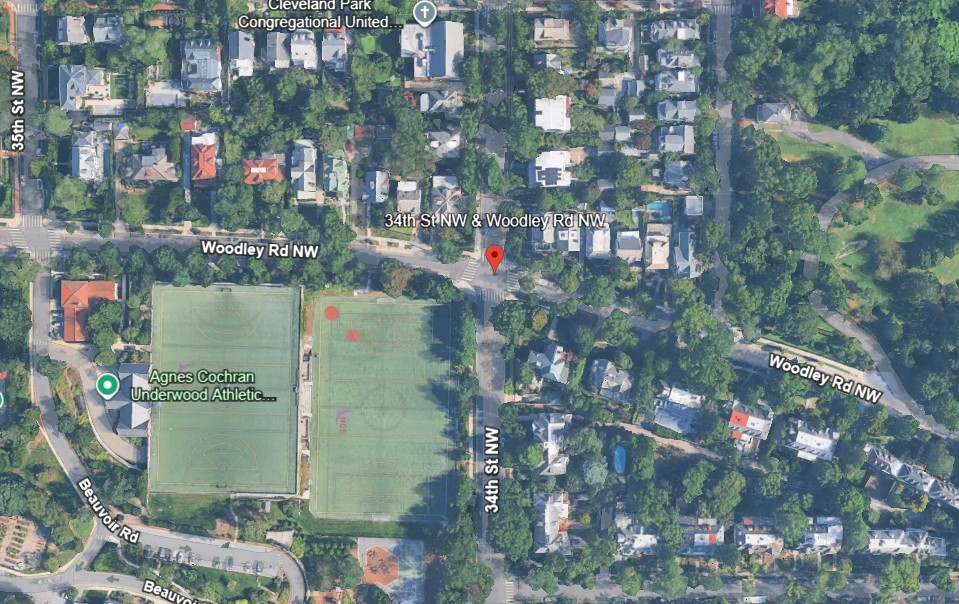
On the night of July 23, 1970, a strange event occurred to Hale Boggs in Washington, D.C. Someone in a late model Lincoln Continental reportedly forced Boggs car of the road near the intersection of Woodley Road and 34th Street. Boggs gave chase and was able to record a license plate number, the incident was documented in an FBI document.19
From 1971 to 1972, Boggs served as the House Majority Leader.20 On April 5 and 22, 1971, Boggs made statements strongly critical of FBI Director J. Edgar Hoover.21
The Life of Nick Begich
On April 6, 1932, Nick Begich, Sr., was born in St. Louis County, Minnesota, USA.22 His parents were both of Croatian descent.23 He attended public schools in Eveleth and Eveleth Junior College.24
Begich earned his Bachelors of Arts from Saint Cloud State University in 1952.25 From 1952 to 1959, Begich was a high school instructor, counselor and director for student personnel.26 In 1954, Begich earned a Master of Arts from the University of Minnesota.27 He took took graduate “doctoral” courses at the University of Colorado Boulder and University of North Dakota.28 After college he moved to Alaska, working as a guidance counselor in schools in Anchorage. Later was Director of Student Personnel for the Anchorage school system, then became Superintendent of Schools at Fort Richardson.29
In 1956, Begich married Margaret Jean Jendro.30 From 1956 to 1968, Begich was a part-time instructor of political science at the University of Alaska, Anchorage branch.31 From 1959 to 1968, he was a principal and superintendent in Fort Richardson, Alaska.32
From 1963 to 1971, Begich was an Alaska State Senator.33 In 1967, he served as minority whip.34 In 1968, he began building and managing apartment houses in Anchorage.35 It was also in 1968 that Begich ran for Alaska’s US House seat but lost to incumbent Republican Howard Pollack.36
In 1970, Begich ran again for the same seat as Pollack ran for Governor of Alaska. Begich defeated the republican banker Frank Murkowski.37 Begich served in the US House of Representatives from Alaska’s At-large district.38 In December 1971, Begich spoke at the American Croatian Academic Club of Cleveland, Ohio.39
The 1972 Plane Disappearance
A Timeline of Events
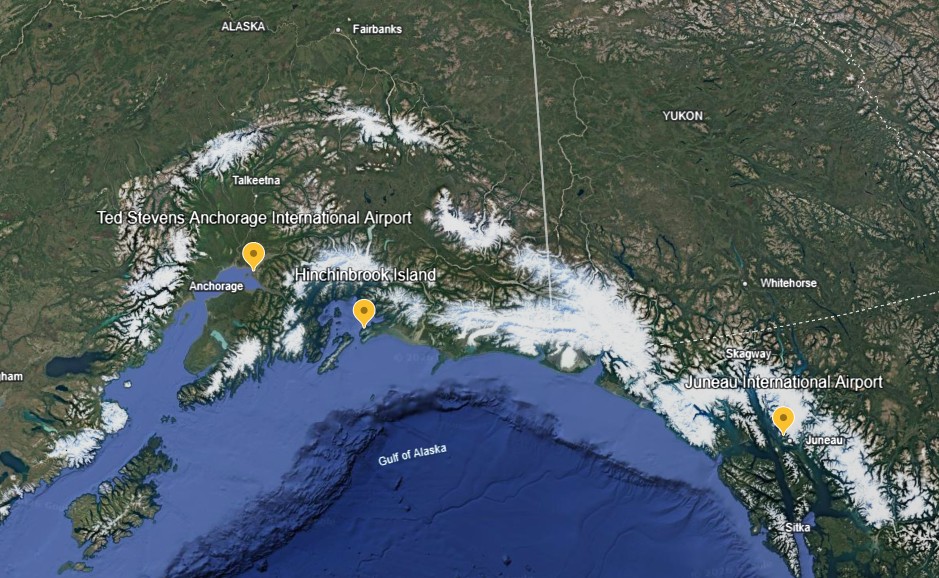
With the lives of our two principal characters summarized, its time to examine their disappearance while on a plane ride in 1972, in Alaska. Nick Begich was on the campaign trail that year. The House Majority Leader and expected next Speaker of the House, Hale Boggs, had travelled to Alaska to help Begich with his campaign. The following is a sequence of events that led up to the disappearance:
- October 15, 1972: Pilot Don Jonz, 38, of Fairbanks, received an unexpected call from a certain Alex Miller while with a friend. He needed to fly Boggs and Begich from Anchorage to Juneau, where they were to attend a fund raising event. He reportedly was told by Miller, who arranged the flight, that if he did this flight his past due landing fees would go away. He asked his friend, Tom, to come with him but he declined.40 Jonz made a call to his mechanic Phill Hewith, who had just completed a 100 hour maintenance inspection of a Cessna 310C, built in 1959, which he wanted to use on his flight.41
- 7:40pm, October 15, 1972: After Jonz arrived, he performed a pre-flight check then took off.42
- 8:30pm, October 15, 1972: After arriving at the Anchorage airport, he met with his girlfriend, Cheryl James (now Mitchell), who picked him up and went out for dinner where Jonz had a single drink. During the night, Jonz checked the weather forecast twice.43
- October 15, 1972: Some reporting indicates that witnesses saw someone lurking around the plane.44
- -8;00am, October 16, 1972: Cheryl took Jonz to the airport where they had breakfast. Jonz, a divorcee made a phone call to his 10-year-old son. They then went to the aircraft, moved it to fill up with gas and after about 30 minutes moved back to wait for the passengers.45
- 8:40am, October 16, 1972: The three men arrived, Hale Boggs, Nick Begich, and Russell Brown, Begich’s aide. Everyone introduced themselves, the four men boarded the plane and Cheryl left.46
- 8:55am, October 16, 1972: Jonz requests to taxi down runway 24R.47
- 8:59am, October 16, 1972: The plane lifts off departing Anchorage International Airport, control tower operator Melvin South was the last person to spot the plane, everything appeared normal.48
- 9:09am, October 16, 1972: Jonz filed a flight rules plan with the Anchorage flight service stations. He spoke to Robert Mahoney, an FAA flight service specialist. Jonz estimated the flight to take 3.5 hours. Jonz stated he planned to fly via the V-317 airway to Yakutat, then to his destination at Juneau International Airport. Mahoney asked whether they had emergency gear and a locator beacon on board, to which Jonz responded in the affirmative.49 Weather conditions were reported to have been low clouds, fog and a drizzle, not conducive to flight under Visual Flight Rules.50
- 12:30pm, October 16, 1972: The plane misses its arrival time at Juneau International Airport.51
- 1:15pm, October 16, 1972: 45 minutes after the plane was overdue, word reached the Air Force Rescue Coordination.52
- 3:00pm, October 16, 1972: Concern ratcheted up as the plane still hadn’t arrived and would have ran out of fuel. A massive search effort was mounted as the new rapidly spread.53 The FBI would soon be flooded with hundreds of tips.
- November 24, 1972: The search effort was called off as no trace of the plane or its occupants were found.
- December 29, 1972: A Presumptive death certificate was recorded in the State of Alaska for Nick Begich.54
- January 3, 1973: A presumptive death certificate was recorded for Hale Boggs.55
The Jerry Max Pasley Allegation
Initially, there wasn’t a whole lot to go off of in terms of this plane disappearance being a “strange death” situation. Although this case involved two persons of interest, as listed in ISGP’s “Over 400 Potential Government Assassinations“, they were categorized differently. Boggs pertaining to the JFK assassination and Begich being listed pertaining to US-various. First of all, a “strange death” involving a plane crash is not unprecedented. One of the earliest of these involved to 1970 plane crash of Walter Reuther, a labor leader who had been opposed by J. Edgar Hoover’s FBI, had been supported by the Kennedy administration, and had previously worked with the Teamsters Union. Reuther had survived previous attempts on his life and there certainly is a great deal of controversy surrounding his death.
There were the earlier plane crashes of UN Secretary General Dag Hammarskjold, an ally of the Kennedy administration, in 1961, and of Enrico Mattei of Italy in 1962. One of the earliest strange deaths connected to the JFK assassination aspect in New Orleans was the previously covered plane crash of DeLesseps Morrison and pilot Hugh F. Ward, in early 1964. There was also the 1967 plane crash of George Piazza in New Orleans. While these latter two cases did not have much to go off of, in terms of proving foul play, that cannot be said for the 1972 case of Hale Boggs and Nick Begich.
As far as the Hale Boggs aspect goes, he was indeed a member of Warren Commission and in his later life had been a fierce opponent of J. Edgar Hoover. As previously discussed, controversy surrounded his attitude toward the conclusion of the Warren Commission, but publicly seemed to support their conclusion that Oswald had acted alone. Boggs certainly ruffled some feathers in the early 1970s, but that’s about as far as we can take it.
Initially I had very little information about Nick Begich, or about what made his death in particular “strange”. There certainly were some strange tips sent to the FBI, but that was about it. That was until I ran across the 2021 podcast series “Missing in Alaska” hosted by Jon Walczak. Although Walczak dismisses the Boggs aspect as strange, he does reveal a great deal of intriguing information regarding Begich. However, what he discovered is certainly not for off in relevance to Boggs and New Orleans.
In March 4, 1974, at the Eldorado Lodge in Tucson, Arizona, an Arizona DPS undercover detective Tom Davis, his supervisor and a reporter were present at a wedding observing Jerome “Jerry” Max Pasley, 33, and Peggie Begich, noting that they had evidently been married. Also present was Sal Spinelli. They honeymooned in Mexico where they were joined by Pete Licavoli Jr.56
Pasley was known to have been a mobster described in the podcast as a murderer, bomber and abusive. He was born in Detroit, Michigan, in 1941. He enlisted in the US Navy as a teen. On May 30, 1960, Pasley was hitchhiking in California when four men accosted him. They used a sharp objective to carve a cross and two letter Z’s into his arm. He was discharged from the Navy in 1962 and returned to Detroit, where he started working for the Licavoli family, an organized crime syndicate led by Pete “Horseface” Licavoli, Sr. and befriended his son Pete Jr.57
In the mid-1960’s, the Licavoli family moved to Tucson, Arizona and Pasley went with them. The Bonanno’s also moved to Tucscon. Pasley befriend Joe Bonanno‘s sons Bill and Joe Jr. In 1971, Pasley made a brief cameo in Honor They Father.58 In 1968, Pasley reportedly was involved in the bombing of the house of a prominent judge, a friend of Joe Bonanno whom he distanced himself from. He was allegedly responsible for two other bombings.59
In 1973, Pasley and his friend Sal Spinelli moved to Alaska following the oil boom there. In late-1973, Peggie Begich was with a friend at the Holiday Inn in Anchorage when she reportedly ran into Pasley, and they hit it off and got married in Tucson the following year. Spinelli opened a jewelry store with Peggie Begich’s oldest son Nick Begich Jr., a teenager at the time. That store would later be alleged to have been a front for stolen jewelry, including turquoise trafficked from Arizona to Alaska.60
In May 1974, Peggie and Pasley started a business called Max, Inc., with Peggie as President, the Vice President was Daniel Max Ziminitch(phonetic) and Pasley as secretary-treasurer. It operated a bar in Anchorage called the Alaska Mining Company, previously called The Green Dragon. By 1976, Pasley was heavily into drugs and his relationship with Peggie deteriorated and got divorced. Pasley then moved back to Tucson where he got himself in trouble being in and out of prison for the next 15 years. Around 1992 he was paroled and got a job selling cars. He found himself wanted for murder, eventually turning himself in, in March 1993, likely in Oregon.61
By late 1994, he started to “talk”. On November 8, 1994, Alaska State Trooper Investigator interviewed Pasley in Tucson, Arizona, at the Peamont County Jail, alongside two other investigators. The following is a long transcript taken from the audio reenactment released by Jon Walczak on his podcast “Missing in Alaska”:
PASLEY: I don’t know why things went the way they did sometimes. You know, I was just pretty much, – I’m what they call in those days, – there’s two eras in my life. There’s two parts of my life. There’s before drugs and after drugs.
INTERVIEWER: Mhmm.
PASLEY: Before drugs, I was just basically a fuckin’ thug. Known as a do-things guy, if you wanted something done, you came to see me.
INTERVIEWER: Right.
PASLEY: If it was right for me, I’d do it for ya. Sometimes without money, sometimes I’d charge. You know, why wait for a favor later, you owe me.
INTERVIEWER: Right.
PASLEY: You know, and I did a lot of that down here. I think my record shows that, because I’ve had this conv- well not this conversation but I’ve had conversations with people that he knows are in and out game, been retired for years.
INTERVIEWER: Mhmm.
PASLEY: And we can go back in the records and see that. I’m a- I was a do-things guy for some pretty big people at one time. You know, big people wanted me to do things for them. Sometimes I was taken advantage of, sometimes I took advantage.
INTERVIEWER: Mhmm.
PASLEY: And I don’t know why things- sometimes- I don’t know, I can’t put it all together. I just know it happened and walked away, you know.
INTERVIEWER: Mhmm.
PASLEY: [Clears throat] Hale Boggs and N-Nick Begich- Hale Boggs was a God, big man.
INTERVIEWER: He was speaker of the house.
PASLEY: Speaker of the House, and-
INTERVIEWER: Or-
PASLEY: Just been in to it with the FBI and all that shit. He’d been harassing the FBI pretty bad, [caughs] doing something against ’em. I don’t know what, but I remembered it was something to do with him and the feds. There’s a guy here in town called Joe Iatarolla(phonetic), you know, you know of him.
INTERVIEWER: Mhmm.
PASLEY: They call him Joey the Eye, mafioso from Chicago, you know he’s Nicki Palermo’s cousin. He’s on the outs with him now and, he was with the Bonanno’s. A lot of people don’t know that, a lot of people suspect that, a lot of people think that, but he was Joe-, he was J.B.’s guy in town.
INTERVIEWER: Mhmm.
PASLEY: Old man Bonanno.
INTERVIEWER: Yeah.
PASLEY: You know.
INTERVIEWER: Yeah, Tom’s already told us, you know, given us a history about-
PASLEY: Bonannos
INTERVIEWER: -this guy.
PASLEY: Yeah, he came to me one time, and I’m hangin’ out at The Trail, Spanish Trail, and you know, I’m gonna tell ya this, but- but I’m just-, or it’s-, I don’t think we can go anywhere with it, you know, but I’m gonna say this. If we do decide to go someplace with it, you guys gotta give me a hand.
INTERVIEWER: OK.
PASLEY: Huh?
INTERVIEWER: OK.
PASLEY: Don’t throw me out there to fuckin wolves or nothin’.
INTERVIEWER: OK.
PASLEY: But I don’t see how we can possible go anywhere with it. He came to me, and I’m at The Trail, the Spanish Trail Motel, one of the biggest at the time, one of the biggest in town, people, friends of mine own it. They were half ass, Lui Marconi and his dad. I pretty much had the run of the place. If you wanted a room to spend the night, wanted to bring a braud, come and see me. Here’s a key for ya. Just do your favors. The bar tab, I could drink all I want, eat all I want, I was their guy. Joey came to me and asked me if I could get him a room for one night. Ya know, for a friend of his, who, a favor for the old man, is what he said. No problem man, you know. I got him a room. He said, “I’ll meet ya down here tomorrow afternoon.” So the next afternoon he met me, I get him a key to the room, he said “Take a ride with me to the airport.” We drove to the airport. Well I hate to tell ya all this shit, but I’m gonna tell you. OK?
INTERVIEWER: OK.
PASLEY: He goes inside the airport, I sit out in the car. He came out with Peggie Begich. We got in the car, he introduced her to me as Margarette, we went back to the hotel. Took her to her room.
INTERVIEWER: What year would this have been?
PASLEY: This would have been ’72.
INTERVIEWER: OK.
PASLEY: Summer.
INTERVIEWER: Alright.
PASLEY: We went back to the hotel, I give her the key to the room, took her bag, she had just one bag. Went in there. Joey left, I left. I had my room there, it was up the way. Joey says to me, before he leaves, he said, “Why don’t you have dinner with use tonight?” I said, “sure.” You know, he says, “pick her up at 8 o’clock, come to the Kontiki.” It’s a Polynesian joint here in town. I called her about 7:30. I said, “I’m supposed to pick ya up. Bing-ba-da-bing. I’ll be ready.” So I go and pick her up, we drive to the Konitiki, we went in there, there’s Joey the Eye and Joe Bonanno, I went to the table, we all went to the table, the four of us sat there, we ate. We order, we ate. Now Joe Bonanno was not my buddy. He’s not a type of guy I hang around or nothin’, but I knew the old man. I knew him from his son Joey Jr. I took his wife Fey one time when she was here in Tucson, give you a little background here-
INTERVIEWER: Mhmm.
PASLEY: And she had to go to California, to San Francisco, to her daughter’s house, which was Catherine Genovese. And he asked me, he sent word for me to pick up his wife, take her and drive her to San Francisco, which was sort of like, you know how those daggers(?) are, I mean you don’t just, they don’t throw anybody in their car with their wives.
INTERVIEWER: Mhmm.
PASLEY: You know what I mean? Especially, you know, mother and children. So I’m the one that took Fey to San Francisco, to Genovese’s house. Anyway, he’s there and he gives me that old bullshit that he always does, “Oh you’re a good boy, you’re a good boy, you’re my boy Joe, oh you looked out for my boy Joey.” He gives me all that shit. We had dinner there and we ate. After dinner, Joey the Eye gives me the sign, he wants to talk to me. So we go to the bar. I leave the two of them alone, we went to the bar, we had a few drinks, me and him sittin’ there, you know, and basically I could- I sense right away what it was. It was just to get me away from the table. He didn’t say that-
INTERVIEWER: Mhmm.
PASLEY: Ya know, but I didn’t question him, ya know. You know what time it is in cases like that. And we went back to the table after a while, and that was it, they left. I took her, we went to the, Bear Inns(?), which was a bar here in town, did a little dancin’, little drinkin’, shit like that, and that’s how I met her. I got friendly with her.
INTERVIEWER: Mhmm.
PASLEY: About two weeks after, I wanna say two weeks, three weeks after that, Joey the Eye came to me and says “You wanna take a trip?” “Mkay, the old man, for us?” He said “for us.” So I said sure. He said alright, her says meet me down here. He gave me a certain time to meet him. He says “Don’t pack a bag.” He says just bring a suite, travel-travel light, cause you’re gonna be goin’ one night, maybe two.” Pack a- he was explicit about this, for me not to bring a suitcase. Bring a suit bag, so I took just a suit bag with a couple pairs of underwear in there, couple pairs of socks, a change of, one change of.
INTERVIEWER: Mhmm.
PASLEY: He picked me up. He drove me to the airport, he’s got a one way ticket to Alaska. I’d never been to Alaska. He says, Gene Fowler is gonna meet ya at the airport. OK, now I knew he knew Fowler.
INTERVIEWER: Mhmm.
PASLEY: ‘Cause, you know, Fowler used to come to Jester’s Court all the time. He was hangin’ out over there at the time. And everybody like that, I never seen, oldman Bonanno never came in there to my knowledge.
INTERVIEWER: Mhmm.
PASLEY: OK, I got on the plane- oh when he drove up there he gave me this suitcase and the key to it. He said, here, don’t even open this fucker, just take it to Fowler, he’ll meet you at the airport. Fowler meets me at the fuckin airport, when I get off the plane to Alaska. I’d never been there before. Danny Zivinch(?) is with him. And he went to some fuckin’, it wasn’t a hotel, like an apartment, that’s where I spent the night. And I gave him a suitcase. Now that’s all I know. Later on, Danny tells me when I get back there, I went back, this must of been, I’m gonna say September ’72, I went back April ’73, and me and Zivinch got real tight.
INTERVIEWER: OK.
PASLEY: I hung out with Gene for a little while there at Chef’s Inn and all that stuff, me and Zivinich got real tight. Zivinich told me later that it was a fuckin’ bomb. And a high-high tech bomb. You know.
INTERVIEWER: Mhmm.
PASLEY: Now I don’t know if he was just bullshittin’ me.
INTERVIEWER: When did that plane go down, do you know?
PASLEY: When did it go down? It went down in October of ’72.
INTERVIEWER: Mhmm.
PASLEY: I don’t know who put it on there. I don’t know. I don’t even know if I was bein’ bullshitted, if I was being lied to.
INTERVIEWER: Mhmm.
PASLEY: I sort of feel like I was being told the truth.
INTERVIEWER: Well when did-
PASLEY: I know that Peggie and Zivinch-
INTERVIEWER: Mhmm.
PASLEY: Were half, and I’m not saying Peggie even had this done, you know.
INTERVIEWER: Mhmm.
PASLEY: I don’t know, I don’t know what-what-what the fuckin story was there, you know. I know that it was something I wanted to- I wanted to know- but i didn’t want to delve too much off into it.
INTERVIEWER: But it-it was-now how was it that told you that this high tech bomb, was that Gene Fowler, that told you that, er’
PASLEY: That was Danny Zivinich.
INTERVIEWER: Danny Zivinch
PASLEY: My partner.
INTERVIEWER: See- See I never heard of him in years, I have no idea where he’s even at.
PASLEY: He’s real low- he’s real low profile. He didn’t get into the drugs with us.
INTERVIEWER: Uhuh.
PASLEY: He stayed out of the drugs.
INTERVIEWER: Do you know where he’s at now? Or anything?
PASLEY: Danny Zivinich, I heard he’s in Anchorage.
INTERVIEWER: Still in Anchorage, or?
PASLEY: I hear he owns a bar out there, but I don’t know for sure. I know that me, him and Peggie went into business together.
INTERVIEWER: Mhmm.
PASLEY: And she’d give him the, she’d give us the money.
INTERVIEWER: Mhmm.
PASLEY: To open that joint. … What do I think, my own personal opinion, In don’t know, I don’t know. I know that these people got tentacles that can reach all over the country sometimes.
INTERVIEWER: Mhmm. I mean th-that would be so fuckin’ heavy, I mean that’s like-
PASLEY: I know
INTERVIEWER: -killin’ the President for Christ’s sake, you know?
PASLEY: Well yeah, if it’s even true.
INTERVIEWER: Yeah.
PASLEY: I do know this, I know kept the suitcase, I know I had the key, and I never opened it. In fact, I never even, I just carried it to counter, they took it. When I got off the baggage picked it up and Gene Fowler took the fuckin bag. You know.
INTERVIEWER: Mhmm.
PASLEY: So I never opened it, but I wouldn’t have done that anyway. I didn’t know what was in it. I knew it wasn’t drugs though.
INTERVIEWER: Well, where-where did- I mean this first meeting down here is the first time you ever met Peggie, right?
PASLEY: Yeah.
INTERVIEWER: Where did you meet these other people at? I mean did she know the criminal, you never heard ‘er, how long they known her?
PASLEY: I don’t know, I really don’t know. You know. And I- you know I tried to ask her, and she was sort of secretive about that.
INTERVIEWER: Mhmm. I mean ’cause, during that time, her husband was then a Congressman, you know, and-
PASLEY: Mhmm.
INTERVIEWER: You know- you- you just sort of expect them to travel in a different circle. And I was wonderin’ where she would have met all these people at.
PASLEY: Well, see here’s the thing. Let me say something to you about that. You-you say different circles.
INTERVIEWER: Mhmm.
PASLEY: The fuckin’ Deconsini-(? not sure what was said here) was with them down there, you know. The head of the FBI for the Anchorage area, name was Jay Dealey, he was at my house for parties and shit like that after I married her.
INTERVIEWER: Mhmm.
PASLEY: You know, even the chief of police, whatever his name was at the time-
INTERVIEWER: Flanigan, at that time.
PASLEY: I can’t remember what his name was, but we’d go to banquets and shit and we’d sit at his table, he’d sit with us, and, tryna remember, can’t think of his name. You know it was just one of those things.
INTERVIEWER: Uhuh.
PASLEY: They were around there, Pat Brown, you know he came to town, he’d come to the house.
INTERVIEWER: Right.
PASLEY: You know, yeah I know what you’re sayin, I don’t know man. I don’t know.
INTERVIEWER: Well, when did you get back after you got back to Anchorage, when did you get back together with her. When did you see her again. I went back up in April, when I was workin at the Holiday Inn and she came to town and she checked into the Holiday Inn, she was stayin there.
INTERVIEWER: Mhmm.
PASLEY: See. and I worked my shift. I was workin’ the day shift, I think at that time. And me and her would go honky-tonk at night. And one thing leads to another, and you know, well we got married. And she says, what do you wanna do. I wanna have me a bar, you know. And we were hangin’ out with Danny a little bit.
INTERVIEWER: Mhmm.
PASLEY: You know, Danny came in with us so the three of us bought that bar. I came down here and bought a house, bought a brand new house …
INTERVIEWER: Yeah, I’d imagine she got quite an insurance settlement.
PASLEY: She got, she got fuckin, he had double indemnity on the apartments. Is that right, am I saying that right? Double indemnity?
INTERVIEWER: UH, accidental death benefit type thing?
PASLEY: Yeah, you get paid twice I think.
INTERVIEWER: Yeah, you know, depending on what kind of policy you got.
PASLEY: And the mortgage, the apartments were paid off free and clear.
INTERVIEWER: Mhmm.
PASLEY: Did they blow him up? I don’t know. Did J.B. have him blown up? I don’t know. I know I took a fuckin package up there and they said it was a bomb. Danny did. They might have been bullshittin’ me.
INTERVIEWR: What kind of bag was it they took up there.
PASLEY: It wasn’t, it was a suitcase. … but it wasn’t a big one. … looked like it was soft … I think it was clothe, it was leather, I think it was hard leather. [——-]
PASLEY: I went up there, must have been September, … ’cause I was hangin out of the Trail then, you know.
INTERVIEWER 2: And Joey the Eye is the one that gave you the bag?
PASLEY: Mhmm, yeah. … yeah and later on I was down here when he went down. … And we were all in the office over there on Broadway, matter of fact it was Walter Predo’s office, remember Predo? … but he had an office over there on Broadway and uh-Country Club, right across from the Austin Sandwich Shop, upstairs in the Coldwell Banker building, had a big sign on it. And were all in there, me Lui Marconi, him, somebody else, I can’t think of- a couple more guys. And they were talking about Boggs and the plane goin’ down. And it was Predo who said that the fucker fucked with the FBI and something like that, they probably blew him up, or something like that. That’s what asshole Predo said, you know. So he’s the one that brought up that shit about blowing them up. … You know, now were they blown up? Nobody knows if they were blown up, ’cause they never found it … not a trace of the fuckin thing. … [——–] … when Danny was talkin’ to me, see Danny was drunk, you know … You know how guys are when they get drunk, you know how they start their whiskey start runnin’ off and he was talking about being a high tech fucker,… and just how high tech was it, you know, not only that, I thought about this later, you know, from what I understand the plane was a spur of the moment plan. … From what I understand they were gonna fly commercial to Juneau. … all at once they jumped up and said well lets charter a plane. … If they would have had a bomb, how did they know they were gonna charter a plane. … and how do they get it on there afterwards. … unless it was made for car and they were gonna put it up under there somewhere and said well fuck it let get the plane, well how do those people know that, see. That’s where the mystery comes in, for me. … You know she ran around him a lot … [——–] she had a black man, and Nick knew it … [—–] … No, she didn’t talk about it. She never talked about it. The only thing she mentioned about that plane was that the President called her … she used to get mail from nuts tellin’ her that they knew where he was and all this. …[decided to stop transcribing for space]
On January 3, 1995, a second follow up interview of Jerry Pasley was performed.62 27-days later, Larry Fowler was shot to death on a remote road in Alaska.63 The Missing in Alaska podcast continues in following episodes, including describing how Pasley’s allegations were handled by the FBI, which essentially went no where after interviewing Danny Zivinich, and also interviewed Pasley, determining he was not reliable. Essentially there are all the hallmarks of a coverup on this track.64 In 1996, Pasley was convicted of a murder based on details he gave in the interview.65
In 1997, the FBI got a tip claiming two people had exchanged letters in 1995 discussing the assassination of the missing congressmen. It indicates that someone along with an accomplice placed a bomb on Boggs’ plane, on orders of a boss who was doing a favor for J. Edgar Hoover. The motive was allegedly that Boggs wanted to cut the budget of the FBI, so Hoover wanted Boggs taken out.66
The Bonanno Link to the JFK assassination
The ‘Missing in Alaska” podcast detailed allegations made by Jerome Max Pasley linking Joe Bonanno, Sr. to an alleged assassination plot to bomb the plane of Hale Boggs and Nick Begich. While the host dismissed the idea that the alleged bombing had anything to do with Hale Boggs and his connection to the JFK assassination, his focus was on Nick Begich and the link to his widow Peggie Begich.
One report, as mentioned earlier, summarized an alleged correspondence between two men regarding the planting of a bomb on the plane on orders from a boss, likely Joe Bonanno, Sr., doing a favor got FBI Director J. Edgar Hoover, who actually died just prior to the plane disappearance. Hoover certainly would have played a key role in the JFK assassination coverup, as well as Boggs being on the Warren Commission.
Nonetheless, the fact that Bonanno came up was highly intriguing, because we’ve already mentioned him before in connection to Permindex. in ‘Permindex’ by EIR, this is summarized:
“According to official incorporation papers on file in New York City and Berne, Switzerland, mob attorney Roy Marcus Cohn and Montreal crime boss Joseph Bonanno were both personal stockholders in Permindex through their ownership of the Lionel Corporation of Hillsdale, New Jersey.
At the time of Permindex’s initial incorporation, 50 percent of the corporate stock was purchased by Major Bloomfield. A significant minority position was purchased by Lionel Corporation. Several years before the Permindex investment, Lionel had been bought up by Cohn and Bonanno. Sources indicate that the Lionel buy into Permindex was financed through a $600,000 “loan” that Cohn arranged through contacts in Hong Kong. New York City corporate records show that at of 1958, Joseph Bonanno was the chairman of the board of Lionel and attorney Roy Cohn was president.
In 1960, shortly ofter the Lionel-Permindex arrangement had been sealed, Joe Bonanno was formally removed from the chairmanship of the New York-New Jersey-headquartered defense contractor. His replacement-at the recommendation of Major Louis M. Bloomfield-was recently retired General John Bruce Medaris.
What chain of events brought Cohn, Bonanno, and Medaris together as investors in Permindex? …
Cohn’s first major commercial venture-which brought him in league with one of the leading organized crime figures in North America-was his 1958 takeover and reorganization of the Lionel Corporation.
At the time of the Cohn-Bonanno takeover, Lionel had spent several years in the red. Cohn, a distant relative of the Lionel Corporation’s founder Joshua Lionel Cowen, bought out the company, which was then manufacturing toys, and began buying up small companies involved in the production of electronics components, all related to the defense industry and specifically the space program. Cohn’s next move was to bring General Medaris onto the directorate of Lionel.
The Cohn-Medaris-Bonanno combination-with special support from FBI chief Hoover-spent the next half dozen years pairing up the subsidiary companies with lucrative defense contracts. At the same time the nest of corporate fronts was used to carry out other “business” on behalf of Major Bloomfield’s trade expositions company in which, as we noted, Lionel had been an enthusiastic investor.
At the end of 1963, Cohn et al. sold off Lionel and all of its subsidiaries. One of the most lucrative pieces of the Lionel “empire”, the Intercontinental Corporation of Garland, Texas, was sold to Robert Vesco. It became one of Vesco’s earliest financial scores.
It was the same Intercontinental Corporation that author “Torbitt” identified as the front through which a group of Cuban exiles, all veterans of the Caribbean gambling and narcotics syndicate and the Bay of Pigs paramilitary operation, were assigned to Permindex board member Ferenc Nagy to play supporting roles in the assassination of John Kennedy.
Cohn’s partnership with Joe Bonanno, as well as his access to hundreds of thousands of dollars in Hong Kong black market money brings us to an even more essential point about Roy Cohn’s post-McCarthy career. Far from being an “attorney” in any conventional sense of the word, Cohn functioned as the “Mr. Fic-It” for a cabal of diversified criminal elements ranging from Lionel president Joe Bonanno, to FBI boss Hoover, to some of the most chic princes of the continental jet set.”67
While none of this report has been proven, it ties Bonanno, Hoover and Cohn into Permindex, which came up in the 1960s New Orleans DA Garrison investigation into the JFK assassination implicating Clay Shaw, a board member of Permindex. Hale Boggs was intimately connected to this scene, from his home in New Orleans to his role in the Warren Commission and beef with Hoover. Nick Begich’s connection to Bonanno (through his wife) certainly tracks with this line of reporting.
Notes
- https://www.findagrave.com/memorial/6925022/hale-boggs ↩︎
- https://en.wikipedia.org/wiki/Hale_Boggs#Personal_life ↩︎
- *) https://www.findagrave.com/memorial/6925022/hale-boggs; *) https://en.wikipedia.org/wiki/Hale_Boggs#Gubernatorial_bid Boggs was part of the American Student Union in the 1930’s ↩︎
- *) https://www.findagrave.com/memorial/6925022/hale-boggs; *) https://en.wikipedia.org/wiki/Hale_Boggs#Early_life_and_education part of attempt to break the power of “political machine” of US Senator Huey Long, assassinated in 1935 ↩︎
- *) https://www.findagrave.com/memorial/6925022/hale-boggs; *) o https://en.wikipedia.org/wiki/Hale_Boggs#U.S._House ↩︎
- https://isgp-studies.com/ngo-list-foundations-and-think-tanks-worldwide ↩︎
- https://en.wikipedia.org/wiki/Hale_Boggs#U.S._House ↩︎
- *) https://www.findagrave.com/memorial/6925022/hale-boggs; *) o https://en.wikipedia.org/wiki/Hale_Boggs#Gubernatorial_bid ↩︎
- https://en.wikipedia.org/wiki/Boggs_Act_of_1951 ↩︎
- https://en.wikipedia.org/wiki/Hale_Boggs#Gubernatorial_bid ↩︎
- https://isgp-studies.com/misc/death-list/articles/1965_05_Maurice_Brooks_Gatlin_death ↩︎
- https://isgp-studies.com/american-security-council-membership-list (cites: Jim DiEugenio, ‘Ed Butler: Expert in Propaganda and Psychological Warfare’ (www.ctka.net)) ↩︎
- https://en.wikipedia.org/wiki/Hale_Boggs#Later_House_elections ↩︎
- *) https://en.wikipedia.org/wiki/Hale_Boggs#Later_House_elections Youngest , cites: https://books.google.com/books?id=j6Z_LOsTRi8C&dq=%22had+strong+doubts+about+it%22+boggs&pg=PA141); *) https://podcasts.apple.com/us/podcast/1-the-disappearance/id1569883308?i=1000523435777 December 1963, Boggs reportedly planned to keep a journal while on the Warren Commission, but it was never found. ↩︎
- *) https://en.wikipedia.org/wiki/Hale_Boggs#Later_House_elections (Cites: https://news.google.com/newspapers?id=JGgzAAAAIBAJ&pg=4904%2C4778000 ; https://news.google.com/newspapers?id=lxQhAAAAIBAJ&pg=7278%2C3847028 ); *) Boggs Jr. claimed later that his father had shown him dossiers compiled by the FBI on Warren Commission critics in order to discredit them. https://www.nytimes.com/1975/01/31/archives/boggs-says-father-left-fbi-dossiers.html ↩︎
- *) https://www.findagrave.com/memorial/6925022/hale-boggs; *) Hale Boggs – Wikipedia Cites: Mellen, Joan (2007). A Farewell to Justice. Potomac Books. pp. 1–2. ↩︎
- https://isgp-studies.com/american-security-council (cites: Aug. 6, 1966, Milwaukee Sentinel, Politics Shelved for Luci’s Wedding) ↩︎
- https://en.wikipedia.org/wiki/Hale_Boggs#Later_House_elections ↩︎
- https://podcasts.apple.com/us/podcast/1-the-disappearance/id1569883308?i=1000523435777 ↩︎
- https://en.wikipedia.org/wiki/Hale_Boggs#Later_House_elections ↩︎
- ibid. ↩︎
- https://www.findagrave.com/memorial/22633905/nick-begich ↩︎
- https://en.wikipedia.org/wiki/Nick_Begich_Sr. ↩︎
- https://bioguide.congress.gov/search/bio/B000315 ↩︎
- ibid. ↩︎
- ibid. ↩︎
- ibid. ↩︎
- https://www.nickandpeggebegichfund.org/about-nick-begich ↩︎
- https://en.wikipedia.org/wiki/Nick_Begich_Sr. (cites: U.S. Government Printing Office, [U.S. Government Printing Office Memorial Services Held in the House of Representatives and Senate of the United States: Together with Tributes Presented in Eulogy of Nick Begich, Late a Representative from Alaska], 1973, page 52.; National Water Resources Association, Water Life magazine, Volume 35, 1976, page 38.) ↩︎
- https://en.wikipedia.org/wiki/Nick_Begich_Sr. ↩︎
- *) https://bioguide.congress.gov/search/bio/B000315; *) https://en.wikipedia.org/wiki/Nick_Begich_Sr. (cites: https://www.google.com/books/edition/The_Alaska_Survey_and_Report_1970_1971/XabnAAAAMAAJ?hl=en) ↩︎
- https://bioguide.congress.gov/search/bio/B000315 ↩︎
- https://wikispooks.com/wiki/Nick_Begich ↩︎
- https://bioguide.congress.gov/search/bio/B000315 ↩︎
- ibid. ↩︎
- https://www.adn.com/alaska-news/article/howard-pollock-alaskas-2nd-congressman-dies-california/2011/01/12/ ↩︎
- https://en.wikipedia.org/wiki/Nick_Begich_Sr. ↩︎
- ibid. ↩︎
- https://podcasts.apple.com/us/podcast/2-the-search/id1569883308?i=1000523435655 ↩︎
- *) https://podcasts.apple.com/us/podcast/1-the-disappearance/id1569883308?i=1000523435777; *) https://en.wikipedia.org/wiki/Hale_Boggs#Disappearance_in_Alaska; *) https://podcasts.apple.com/us/podcast/9-anchorage/id1569883308?i=1000523436443 ↩︎
- *) https://www.check-six.com/lib/Famous_Missing/Boggs.htm; *) https://podcasts.apple.com/us/podcast/1-the-disappearance/id1569883308 ↩︎
- ibid. ↩︎
- ibid. ↩︎
- https://podcasts.apple.com/us/podcast/6-murder-and-meh/id1569883308?i=1000523435588 ↩︎
- ibid. ↩︎
- *) ibid.; *) https://www.check-six.com/lib/Famous_Missing/Boggs.htm, Boggs was reportedly was accompanied on the first leg to the airport by Bill Clinton. ↩︎
- https://podcasts.apple.com/us/podcast/1-the-disappearance/id1569883308 ↩︎
- *) ibid.; *) https://www.check-six.com/lib/Famous_Missing/Boggs.htm ↩︎
- *) https://podcasts.apple.com/us/podcast/1-the-disappearance/id1569883308; *) https://www.check-six.com/lib/AAR73-01.pdf ↩︎
- https://www.check-six.com/lib/Famous_Missing/Boggs.htm ↩︎
- https://podcasts.apple.com/us/podcast/1-the-disappearance/id1569883308 ↩︎
- ibid. ↩︎
- ibid. ↩︎
- https://bioguide.congress.gov/search/bio/B000315 ↩︎
- https://en.wikipedia.org/wiki/Hale_Boggs ↩︎
- https://podcasts.apple.com/us/podcast/4-bananas-in-tucson/id1569883308?i=1000523435753 ↩︎
- ibid. ↩︎
- ibid. ↩︎
- ibid. ↩︎
- ibid. ↩︎
- ibid. ↩︎
- https://podcasts.apple.com/us/podcast/5-the-transcript/id1569883308?i=1000523435727 ↩︎
- ibid. ↩︎
- https://podcasts.apple.com/us/podcast/6-murder-and-meh/id1569883308?i=1000523435588 ↩︎
- https://podcasts.apple.com/us/podcast/7-dont-knock-arizona/id1569883308?i=1000523436346 ↩︎
- https://podcasts.apple.com/us/podcast/6-murder-and-meh/id1569883308?i=1000523435588 ↩︎
- https://isgp-studies.com/misc/Kennedy/data/1981-11-04-eir-permindex-cmc-jfk-oas-report.pdf ↩︎
 Conspiracy Dossiers