Author: Carter McLellan – Date: September 20, 2026
CONTENTS
Early Years, 1925-1946
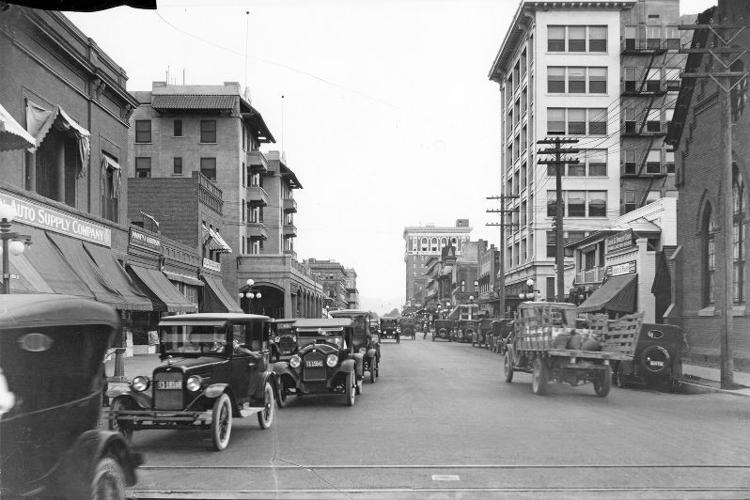
David Sanchez Morales was born on August 26, 1925, in Phoenix, Maricopa, Arizona.1 His heritage has been described as Mexican and Yaqui Indian.2 The Yaqui, Hiaki, or Yoeme, were indigenous people of Mexico and the US who spoke Yaqui, an Ulto-Aztecan language. Their primary homeland is the Rio Yaqui valley, located in Sonora, a Mexican State south of Arizona.3 David’s mother was Juana Sanchez Morales (1904-1962), who was born in Tempe, Maricopa, Arizona. He also had an older sister, Carmen Morales (1921-1982), who was born in Phoenix.4 Details about David’s father appear to be lacking for now.
Phoenix, the Capital of Arizona, was a growing city at the time Morales was born. WWI had ended some years ago and it was the early years of the Coolidge administration (1923-1929). While growing up in Phoenix, his parents at some point got divorced and he was “virtually adopted” by the parents of his best friend, Ruben Carbajal.5 During the Great Depression, Morales attended Saint Mary’s Monroe School, from 1932 to 1940.6 The school was located at 215 North 7th Street, and was built in 1914. It is likely that Morales was raised in a Catholic family. At the onset of WWII, Morales attended Phoenix Union High, from 1940 to 1944,7 located at 512 East Van Buren St.
For a couple months in 1943, Morales worked after school hours for Arizona Star Flour Co., located at 901 E. Jackson St., handling flour mill utilities. He left to focus more on his schooling at Phoenix Union.8 During the summer of 1944, after graduating, Morales worked for a couple months at Morrison & Knutson Co. as a carpenter, apparently at their Los Angeles Branch.9
From 1944 to 1945, Morales attended Arizona State College in Tempe, east of Phoenix, where he studied law.10 While attending college, he worked part-time for 7 months as a P. E. Instructor for the Immaculate Heart School, located at 909 E. Washington St.11 While at ASC, in 1945, Morales was a member of the Los Conquistadores.12
In the middle of 1945, as WWII ended, Morales transferred to the University of Southern California, in Los Angeles, also studying law.13 From 1944 to 1945, Morales worked again as a part-time P. E. Instructor for 4 months at the Soledad Catholic Grammar School, located at 4548 Dozier St. Morales had participated in a number of sports and hobbies, from football, basketball, track and baseball, to boxing and swimming.14 Morales presumably dropped out of USC in 1946, as he apparently did not obtain a degree.15
Army Intelligence, 1946-1951
In 1946, Morales appears to have left USC and joined the US Army. That year he also became a member of the American Legion Post #41 in Phoenix.16 In 1946, Morales spent 2 months at Fort Benning, in Georgia, training as a parachutist.17 Morales was attached to the 82nd Airborne and appears to have been deployed to Korea, at some point.18
In 1947, Morales spent five months at the Counter Intelligence Corps School at Camp Holabird, in Baltimore, Maryland, where he was a Special Agent.19 It was here that Morales’ intelligence career really began.
It is not quite clear yet what Morales’ activities were through 1948, but by 1949 he was sent to Germany where he was part of the Allied occupation force.20 From 1949 to 1953, at nights he attended the University of Maryland campus in Germany where he studied political science.21 He also was fluent in Spanish and was able to speak German.22 Almost immediately, Morales was recruited by the newly formed CIA, which began assessing him in 1949.23 Other specific activities through 1950 unclear.
CIA and Berlin, 1951-1953
While Morales was still serving in the Army and going to UM in Germany, he was “detailed” to the CIA by 1951.24 It was likely in this period during the early 1950’s that he began working with Ted Shackley and William Harvey, the CIA Berlin Station Chief from 1952 to 1960.25
Bill Harvey, a former newspaper man and FBI agent, he started working for the CIA around 1951.26 From 1952 to 1959, he was the Chief of the West Berlin Operations Base, succeeding Peter Sichel. However, much more closer associated with Morales was Ted Shackley. He too was recruited by Army Counterintelligence, studied at the University of Maryland, and returned to Germany in 1951 where he was recruited by the CIA. In 1953, Shackley was assigned to work under Harvey at the Berlin Base.27
Details about how these men met and what activities they were involved in is not yet clear. But Berlin was at the center of the decades long Cold War since the end of WWII. We may have clues though about what they may have been involved in. These men were active in Berlin in the middle of the Gehlen Organization activities, which with support from the CIA was the main intelligence organization operating behind the Iron Curtain, and was the precursor to the German BDN founded in 1956.28 Furthermore, between 1949 and 1953, the CIA was involved in organizing stay-behind networks of West Germany agents. The network has involved ex-Nazis and was supposedly disbanded in 1953 out of concern.29
In 1953, Morales was honorably discharged from the Army with the rank of Sergeant First Class.30 He returned the US where assumed a cover as a State Department employee.31 Various reports claim that Morales became involved in the CIA’s Black Operations, or “Executive Action”, as an operative under the Directorate of Plans, killing foreign leaders deemed unfriendly to the US. He also had the nickname “El Indio”.32
Guatemala Coup, 1954
David Morales’ involvement in the CIA operation, known as PBSUCCESS, to overthrow the leftist Jacobo Arbenz government of Guatemala in 1954 appears to be a matter of record.33 Reports have also alleged that Ted Shackley was also involved in this operation,34 but I’ve been unable to place him outside of Germany in this timeframe.
Back in September 1952, the Truman administration through David Bruce had approve an operation to overthrow Arbenz, but aborted the mission when US involvement was exposed. In 1953, President Truman was succeeded by President Eisenhower, who would move forward with the plan in August 1953.
Walter Bedell Smith, Truman’s CIA Director from 1950 to 1953, was under Secretary of State for the Eisenhower administration from 1953 to 1954. Smith came to oversee the CIA’s 1954 Guatemala coup in response to the Arbenz government trying to nationalize United Fruit Co. banana plantations in that country. United Fruit had strong ties to the Dulles brothers, with Allen Dulles as the new CIA Director, and Smith became vice president of the company after his retirement from government in 1955. It is also a company with strong ties to the New Orleans elite, which in turn has its own major links to the JFK assassination. The man the CIA helped overthrow Arbenz was Carlos Castillo Armas, who himself was assassinated in 1957, which also had the CIA allegedly involved.
In January 1954, it was leaked that the US was collaborating with Colonel Armas to train the invading force. A vigorous propaganda campaign ensued as the Eisenhower administration refused to backdown among international pressure. By June 1954, Arbenz handed power to the military junta of Armas, who pledged fealty to the Eisenhower administration in a Washington visit with Vice President Nixon and with a substantial of amount of US financial support proceeded establish a military dictatorship before being assassinated three years later.
Morales’ role in the operation remains unclear. What can be said with absolute certainty is that many PBSuccess veterans later would emerge as key players in the covert war to takeout Castro. More on that later.
Caracas, Venezuela, 1955-1958
Having participated in the CIA’s Guatemala Coup in 1954, from 1955 to 1958 Morales was on the staff of the US embassy in Caracas, Venezuela.35 He first traveled to Washington DC, before the CIA reassigned Morales to Caracas on October 19, 1955, changing his role as an Operations Officer to an Intelligence Officer.36 In June 1955, Morales was granted cryptographic clearance, which was revoked in January 1957.37 By late October 1955, the CIA arranged his State Department cover with his departure from Washington, D.C. planned for December 1955.38 In September 1956, Morales was promoted from GS-12 to GS-13 while serving at the Caracas Station.39
The Venezuelan government was an anti-communist dictatorship led by Perez Jimenez. The US deemed the country crucial with its substantial supply of petroleum. It was likely that Morales’ mission was to protect or preserve the government of Jimenez because it was aligned with Washington’s foreign policy. The Perez dictatorship eventually collapsed in January 1958.
Meanwhile, while Morales was operating in Latin America, his buddies Shackley and Harvey remained active in West Berlin where they were involved in the famous Berlin Tunnel operation in 1955 to 1956 and other “black operations”, much like Morales.
In March, 1958, the CIA began processing Morales to be reassigned to Havana, Cuba.40 In April 21, 1958, Morales arrived back in Washington, D.C. pending reassignment to Cuba.41 The situation in Cuba was deteriorating as Washington’s policy toward Cuba’s President Fulgencio Batista, an anti-communist dictator, began to sour.
Havana, Cuba, 1958-1960
Around May 1958, Morales began his assignment at the Havana Station, working at the US Embassy in Cuba, while maintaining a commercial cover involving a Los Angeles marketing-consultant identity.42 The environment he entered was tense. Cuban President Fulgencio Batista, who had returned to power through a military coup in 1952, had been supported by the US. But by 1958, a major opposition movement led by Fidel Castro began to proliferate. Batista’s government became more aggressive toward American business interests cultivated in the country and Washington position toward him began to flip. Some reports claim the CIA began to support Castro’s opposition to Batista.43
At the start of 1959, Batista fled Cuba and Castro’s revolutionary government took over. As Prime Minister, Castro proceeded to kick out the mafia that was active in places like Havana, send pro-Batista Cubans into exile, and nationalize American corporate interests that had been cultivated under Batista, including oil refineries, sugar and fruit plantations, as well as power and telephone companies. Meanwhile, back in the US, the CIA Domestic Contacts Division set up a Cuba listening post in Coral Gables with an overt office in Miami, in January 1959.
In May 1959, a security incident occurred that appears to have involved Morales, whose pseudonym was Stanley Zamka. The Cuban authorities had apparently issued an order involving Morales/Zamka to appear at La Cabana. Later reports claim that he was wanted for seemingly being responsible for the death of two men.44 By July 1959, Morales/Zamka had reportedly been able to move “technicians” and their supplies into Cuba and requested a document and disguise specialist.45 By the end of 1959, the outgoing Eisenhower administration began planning to overthrow Castro.
In March, 1960, President Eisenhower approved CIA DDP Richard Bissell’s JMARC covert action plan against Castro. The plan called for the creation of a unified Cuban exile opposition, propaganda, a covert intelligence/action organization inside Cuba, and development of a paramilitary capable of infiltrating personnel into Cuba. These were precisely the actions Morales specialized in.
In April 1960, the CIA established a Forward Operating Base in Miami, as the city became the center for the Cuban exiles. On April 30, 1960, Morales attended a meeting at the McAllister Hotel where Morales reported having a boat available for exfiltration purposes.46 In May 1960, the CIA made a covert agreement with the Frente Revolucianario Democratici (FRD), which had a paramilitary group called Brigade 2506.
The CIA’s Cuba Project rapidly expanded through 1960, as efforts expanded from infiltrating small groups into Cuba to create resistance networks toward exile recruitment, paramilitary training, maritime infiltration, supply operations, propaganda, counterintelligence and creation of an exile political structure.
On September 28, 1960, the CIA successfully completed a maritime infiltration mission, moving roughly 300 pounds of demolition material into Cuba and exfiltrating two personnel. While not much detail has yet emerged about Morales’ activities in Cuba through this period, there is a story worth noting. Sometime in 1960, according to Havana American Embassy State Department official Wayne S. Smith, he had been drinking at a bar with Morales in Havana. After a heavy drinking session, Morales began talking about the CIA’s covert operations that involved “frog men operating out of Guantanamo Bay.” Smith later remarked that Morales was very indiscrete when drunk, and he was known as a hard-drinker.47
Bissell had brought back Morales’ old boss William Harvey, who arrived back in the US from West Berlin in 1960 to play a leading role in the CIA’s anti-Castro operation. Reports indicate that Harvey was then put in charge of “Executive Action”, the earlier mentioned CIA euphemism for developing means for overthrowing foreign leaders. The operation was codenamed ZR/RIFLE, which was initially aimed at Patrice Lumumba of the Congo before he was executed in 1960. Around September 1960, through a man named Robert Maheu, Harvey initiated talks with mafia figures Johnny Roselli, Sam Giancana and Santos Trafficante about plans to overthrow Castro.48
After two years at the Havana Station, Morales arrived back in Miami in October 1960, by now he was a GS-14, Chief of Counterintelligence at the Miami Base.49
Cuba Project, Miami, 1960-1961
Around the time Morales was back in the US at the Miami Base, JMASH, the base received broader operational authority over project personnel and responsibility for supervising the project activities through Miami.50 On October 24, 1960, the Western Hemisphere Division 4 SO Chief Joseph Langon formally requested “two backstopped residential addresses” for Morales.51
In November 1960, the new President-Elect was John F. Kennedy, who was briefed about this large scale covert operation he had inherited from his predecessor. Meanwhile, the same month, Morales began screening military trainees, something Morales later criticized because he believed CI screening should have begun earlier. By then 300-400 men had already gone to a training camp.52
From late 1960 to April 1961, Morales was responsible for building the exile intelligence and counterintelligence apparatus that was expected to takeover following the overthrow of Castro. Morales trained 39 specially selected Cuban exiles as case officers called AMOTs. They were used to infiltrate anti-Castro exile organizations, infiltrate the pro-Castro 26th of July organization in Miami, compile biographical intelligence on leading members of the exile Frente, create records on roughly 200,000 Cubans, monitor eight Cuban radio stations, and screen recruits for the invasion force.53
Furthermore, Morales created two additional organizations: AMFASTs, approximately 100 prospective counterintelligence/security personnel associated with the invasion effort tasked with advancing behind the invading forces, identify and seize Castro government records and help establish a temporary administration; and AMCHEERs, approximately 100 older, politically less involved Cubans trained as a reserve intelligence corps. Additionally, Morales organized former Cuban diplomats who could potentially be used after regime change.54
In January 1961, the US closed its embassy in Cuba. Morales continued to train the exile intelligence apparatus. In early 1961, now President Kennedy requested Bissell to scale back the JMARC operation, which then became known as Operation Zapata. The Bay of Pigs took place on April 17 1961, resulting in a spectacular failure two days later that left the anti-Castro Cubans who led the failed effort on the ground dismayed with the new Kennedy administration for not doing more to aid them. In the aftermath of the event, Kennedy responded by scaling back the CIA’s paramilitary capabilities. He later on that year forced the resignation of CIA Director Allen Dulles and Director of Plans Richard Bissell in early 1962. John McCone succeeded Dulles and Richard Helms succeeded Bissell.
Post-Bay of Pigs, Morales’ intelligence apparatus survived the invasion, including a number of assets still inside Cuba.55 In May 1961, the CIA performed a review on the failure and interviewed Morales, who explained his programs and criticized having insufficient personnel, delayed CI screening as a result of allowing hundreds of Brigade trainees to go to camp before effective screening.
Exile political leaders after the failed invasion attempted to reorganize Morales AMOT structure and replace some of its trained intelligence leadership with political appointees. Morales microfilmed important files, removed sensitive cryptonyms and records of meetings with Morales, and he retained and displaced trained leadership as a shadow intelligence organization. By June 1961, Morales-linked assets maintained a clandestine human-intelligence network within Cuba. On August 1, 1961, Morales recovered a pouch from Cuba of $2,050 which he carried to JMWAVE.56 On August 20, 1961, Morales was appointed Deputy Chief of Station at what became JMWAVE.57
JM/WAVE, 1961-1965
In mid-1961, new plans were being formulated by July to August. It was around September 1961 that JMASH was expanded into JMWAVE, although the term JMWAVE was being used as far back as February 1961. The first chief of station was Robert K. Davis, a veteran from the Guatemala coup. By November 1961, a group known as SG-A within the Kennedy administration had agreed on a covert operation against Cuba that became known as Operation Mongoose, which was headed by General Edward Lansdale. From November 1961 to April 1952, Morales served as Chief of Special Operations. In May 1962, he had to handled a sensitive matter that prevented him from his normal duties.58
Around early 1962, Lansdale selected William Harvey to head up Task Force W, the CIA branch of the operation, with operational HQ being the new JM/WAVE station in Miami. In February 1962, Harvey personally brought Shackley over from Berlin on a temporary-duty survey to review the Cuban intelligence program at JMWAVE, then being run by Albert Cox, and report back to Harvey.59 Soon Shackley was assignment permanently to JMWAVE, becoming chief of the Miami station by April 1962. Meanwhile, Harvey was continuing the CIA-Mafia Castro assassination operation.
Beginning in May 1962, Morales began to head the Paramilitary Branch, supervising 25 employees and planning agent infiltration and commando raids.60 On May 11, Morales met Guantanamo naval intelligence officer Lt. Jack Modesett Jr. in Miami to discuss Morales’ survey of intelligence source AMCRAIG-1, arms-related activities, and possible cooperation between CIA and ONI.61
On August 17, 1962, Morales, as Dr. Meza, negotiated with the DRE‘s operational leadership. He joined a two hour meeting with AMHINT-2 concerning funding, paramilitary support and CIA control over the organization.62 On August 30, 1962, Morales participated in reassessing CIA control over DRE, which had launched a raid in Havana on their own.63
In October 1962, during the Cuban Missile Crisis, Bill Harvey clashed with Robert Kennedy and was removed as head of Task Force W, being moved to Chief of Station in Rome. Task Force W was dissolved and reorganized under Desmond Fitzgerald‘s Special Affairs Staff, who assumed control of the Cuba operations. Ted Shackley as head of JMWAVE would have likely taken over aspects of Harvey’s operations as well who while in Rome apparently had gotten involved in Gladio.
In January 1963, Bill Harvey recommended Morales for promotion to GS-15, citing intelligence production, agent handling, and operational experience.64 On February 9, 1963, Morales participated in the initial AMTRUNK discussions at a Washington safehouse.65 From April 1963 to March 1964, Morales directed a 35-person Paramilitary Branch responsible for resistance, infiltration routes, arms caches, underwater demolition, and commando operations.66 On April 21, 1963, Morales and Shackley met with Manuel Artime about his organization’s operational role.67 On April 30, 1963, Morales signed a letter appointing Irving C. Devuono, in Grayston Lynch’s personnel file, to command AMLILCA.68
Through February to November of 1963, Morales maintained contact with Jorge Volsky in the AMTRUNK operation.69 On October 7, 1963, Morales requested documentation for Devuono’s alias “George Lee.”70 On November 22, 1963, the day Oswald assassinated JFK in Dallas, Morales was named in a JMWAVE cable to CIA HQ, marked AMWORLD, discussing a letter from the Panama City Station Chief sent to Morales several months earlier, supplying specifications for a boat potentially available for purchase. JMWAVE had initially declined interest, “Zamka unable to find letter, and that HQ should obtain specifics from Panama City. It also stated Morales did not know the identity of HYIF-1.71
On November 26, 1963, Morales did an evaluation for a subordinate, Devuono. By March to June 1964, Morales’ annual assessment was completed. It credits him with supervising 35 employees, recruiting agents, planning commando raids, and directing resistance, infiltration-routes, weapons-caches, and underwater-demolition operations. It also identifies him as senior case officer for an unnamed sensitive Central American operation. The narrative describes successful operations and maintaining readiness despite policy changes. This was an annual assessment, completed in June 1964, rather than a daily activity log.72 From April to December 1964, Morales continued with infiltration and resistance work. Policy restrictions prevented him from using underwater demolition and commando units, but remain available for contingencies.73
From January to March 1965, Morales was a special assistant to JMWAVE Chief Shackley supervising preparations for a counterinsurgency program in Peru.74 On March 11, 1965, the CIA made a security clearance request for Morales, listing him as an Operations Officer, GS-15-3, and gives Lima, Peru as the location.75 On March 16, 1965, the CIA was preparing Morales’ cover at the Agency for International Development (AID).76 Morales’ expected departure date for Peru was June 8, 1965.77
Peru & AID 1965-1967
Under cover of USAID, Morales would have arrived at Lima, Peru, in June 1965.78 His assignment would last until February 1967. Morales’ exact activities in Peru have yet to be elucidated. Morale did serve as a Base Chief in Pakse, Laos, supervising 45 employees.79 Peru had been in a pretty unstable state. After the overthrow of Manuel Prado, who was overthrown by a military coup in 1962, Ricardo Perez took power until 1963, as Nicolas Lindley was in power until Fernando Belaunde was elected. Belaunde remained in power until a coup overthrew him in 1968. The military then nationalized the International Petroleum Company in that country. Around the time Morales arrived in Peru, the CIA/AID were implementing a Special Police Emergency Unit project. In February 1967, Morales’ Peru tour wrapped up ahead of a transition to Laos.80
Laos, 1967-1969
From March 1967 to July 1969, Morales was stationed in Loas under AID cover.81 This move had reportedly been facilitated by Ted Shackley, Morales’ old boss at JMWAVE, who was reassigned to Laos in 1965 to 1968 under William Colby to handle the CIA’s secret war there. Loas, where a CIA backed coup took place in 1957, bordered Vietnam and was a key location in the Vietnam War, especially northern Laos. Morales reportedly started off by handling a desk at Udorn covering paramilitary operations in southern Loas before becoming chief at Pakse. Thomas Clines, a fellow JMWAVE veteran worked at the northern desk.82
While in Laos, Shackley formed the Military Assistance Group-Special Operations Group (MAG-SOG), which was reportedly a “political murder unit.” Oliver North and Richard Secord were reported officers of the group, with Gen. John K. Singlaub as commander from 1966 to 1968. Shackley’s “Secret Team” in Laos involved David Morales, Thomas G. Clines, Carl E. Jenkins, Edwin Wilson, and anti-Castro Cubans Felix Rodriguez, and Raphael Quintero, all veterans of the JMWAVE operation.83 Besides the CIA’s secret war in Laos, accusations have surfaced accusing Shackley of involvement in Air America opium smuggling in Laos during the Vietnam War. As part of the Golden Triangle, Laos became a major producer of heroin by the late 1960s, along with Thailand and Burma. Here Santos Trafficante and Richard Armitage acted is key players in the business.
In Shackley’s memoirs, he recalls inviting Morales to a road-watch-team graduation to strengthen liaison with General Phasouk and local upland communities. During April 1967 and afterward, Pakse and Udorn prepared intelligence for strikes against Route 110. Following Operation SHOCK-1, General Phasouk Somly discussed results with Morales.84 Felix Rodriguez had been involved in the capture of Che Guevara in 1967, reportedly with the assistance of Morales.85
Around June to July 1968, Morales’ family joined him in Laos. His daughters Rita and Sandra recalled meeting him in Japan, then traveling through Hong Kong and Thailand toward Pakse.86 In October 1968, Morales received a Lao decoration, the Order of the King.87 Further, Ted Shackley was succeeded by Larry Devlin as he was reassigned to Vietnam.
In July 1969, Morales’s assignment in Laos ended. It is currently unclear what his activities were from August to September 1969.88
Vietnam, 1969-1971
In October 1969, Morales’ assignment in Vietnam began.89 From late 1969 to 1970, Morales served as Regional Officer in Charge at Nha Trang, with 60 employees under his supervision.90 Upon his arrival in Vietnam he again came under the prevue of his old boss Ted Shackley, who became chief of the Saigon station in December 1968. Shackley’s priorities were reducing the Agency’s direct management of pacification programs and shifting personnel toward clandestine intelligence collection, while retaining selected counterinsurgency responsibilities.91
Reports have indicated that Shackley handled the Phoenix Program in Vietnam, which also involved Morales.92 In November 1970, the CIA destroyed Morales’ AID security file.93 Morales remained in Vietnam through July 1971.94
Latin America, 1971-1975
Following his Vietnam tour in 1971, Morales returned to Washington where he was assigned to the Foreign Resources Division. He cultivated military officers serving on the Inter-American Defense Board or attending the Inter-American Defense College. He recruited several sources himself and developed recruits overseas.95
On October 19, 1972, the deputy chief Walter L. O’Brien of the FRD requested CIA credentials for “Miguel P. Cassio”, a cover for Morales, who was described as an operations officer assigned to the Washington base.96
There is an episode that allegedly took place in the Spring of 1973. One night, Morales was drinking in a Washington hotel room with two close friends, Ruben Carbajal and Robert Walton. The conversation turned to JFK which sent Morales into a rage. Robert Walton recalls Morales striding around the room and out of control. He quotes Morales as saying, “I was in Dallas when we got that motherfucker and I was in Los Angeles when we got the little bastard.” Walton understood that he in some way implicated himself in the death of JFK and RFK. A similar but different account was given by Carbajal. He recalls that as they were drinking, Morales let it be known in a roundabout way, “Well, we got that son of a bitch.” The reasoning being because Kennedy had gotten the Cuban Exiles killed during the Bay of Pigs. Carbajal didn’t ask any questions, fearing for his own life, Carbajal said “The more you ask the less chance you have of living.” Carbajal didn’t recall Morales stating he was in Los Angeles, just that he said “We got him.”97 Yet a third account was given of Carbajal’s statment. Morales talked about his involvement with the Bay of Pigs operation. He claimed “Kennedy had been responsible for him having to watch all the men he recruited and trained wiped out.” He added: “Well, we took care of that SOB, didn’t we?”98
On July 25, 1973, his alias documentation was transferred to the Western Hemisphere Division, including Miguel P. Cassion and Diego S. Mardones.99 On August 4, 1973, a photo was taken of Morales by Kevin Schofield at El Molino restaurant. Morales was identified as a consultant in the office of deputy director for Operation Counter-insurgency and Special Activities in Washington.100The Chile Coup to overthrow Allende took place in September 1973. Some reports allege Morales was involved in that coup.101
On June 20, 1974, Western Hemisphere Division Chief David Atlee Phillips, a JMWAVE veteran, requested the registration of a new alias, Simon S. Martinez, for Morales and expressly for recruiting a Cuban diplomat.102
In the mid-1970’s, Morales served for several months as acting chief of station in Paraguay. He then was on temporary duty in Panama and did work in the Cuban Operations Group.103 On July 16, 1975, Morales was on temporary duty in Buenos Aires, Argentina and retained a passport under the alias Diego S. Mardones Martinez.104 On July 31, 1975, Morales retired from the CIA and he was subsequently awarded the Intelligence Medal of Merit.
Retirement, 1975-1978
In September 1975, Morales was a Contract/Internal employee for the CIA within the Latin America Division’s Cuban Operations Group. He had access to the offices on a daily basis.105 On September 18, 1975, his Army cover was continued.106 From 1976 to 1977, Morales’ specific assignments remain unknown. By February 1978, Morales’ activities became increasingly part of the HSCA investigation into the Kennedy assassinations.
Convenient Death, May 1978
In early May 1978, Morales reportedly made a trip from Arizona to Washington, D.C. On his way back, he apparently began to feel ill. According to his long time friend, Ruben Carbajal, Morales stated that he did not feel good and had a few drinks with his cronies in Washington. He started feeling unwell on the plane ride back. He then left to drive back to Wilcox and Ruben told him to call him when he made it.107
Morales eventually suffered a major heart attack that night. According to Carbajal, the ambulance took hours to arrive and didn’t bring oxygen. “They wasted five hours to get him to the hospital,” Carbajal said. Carbajal went to visit Morales at the hospital and recalled his room surrounded by sheriff’s deputies. Eventually they decided to withdraw life support and he died on May 8, 1978. Morales’ wife Joanna, requested an autopsy not be performed.108
Carbajal believed that Morales was killed by the CIA to prevent him from testifying before the HSCA.109
Notes
- https://www.findagrave.com/memorial/32204654/david_sanchez-morales ↩︎
- *) 2005, Joseph J. Trento, ‘Prelude to Terror’, “David Morales, a Yaqui Indian …“;
*) https://en.wikipedia.org/wiki/David_S%C3%A1nchez_Morales, “Morales, of Mexican descent, …” ↩︎ - https://en.wikipedia.org/wiki/Yaqui ↩︎
- *) https://www.findagrave.com/memorial/7652832/juana-morales;
*) https://www.findagrave.com/memorial/7631605/carmen-fronteras ↩︎ - https://spartacus-educational.com/JFKmorales.htm ↩︎
- PERSONAL HISTORY STATEMENT OF DAVID S. MORALES ↩︎
- Ibid. ↩︎
- Ibid. ↩︎
- Ibid. ↩︎
- *) https://spartacus-educational.com/JFKmorales.htm;
*) 104-10222-10019.pdf ↩︎ - *) PERSONAL HISTORY STATEMENT OF DAVID S. MORALES;
*) 104-10222-10019.pdf ↩︎ - PERSONAL HISTORY STATEMENT OF DAVID S. MORALES ↩︎
- *) Ibid.;
*) 104-10222-10019.pdf ↩︎ - *) PERSONAL HISTORY STATEMENT OF DAVID S. MORALES;
*) 104-10222-10019.pdf ↩︎ - PERSONAL HISTORY STATEMENT OF DAVID S. MORALES ↩︎
- PERSONAL HISTORY STATEMENT OF DAVID S. MORALES ↩︎
- 104-10222-10019.pdf. ↩︎
- David Sanchez Morales (1925-1978) – Find a Grave Memorial ↩︎
- 104-10222-10019.pdf ↩︎
- https://spartacus-educational.com/JFKmorales.htm ↩︎
- 104-10222-10019.pdf ↩︎
- Ibid. ↩︎
- Ibid. ↩︎
- Ibid. ↩︎
- *) 2005, Joseph J. Trento, ‘Prelude to Terror’;
*) https://spartacus-educational.com/JFKmorales.htm ↩︎ - William King Harvey – Wikipedia ↩︎
- Theodore Shackley – Wikipedia ↩︎
- Gehlen Organization – Wikipedia ↩︎
- Operation Gladio – Wikipedia ↩︎
- https://spartacus-educational.com/JFKmorales.htm ↩︎
- Ibid. ↩︎
- *) Ibid.
*) Mahoney, Richard D. (1999). Sons and Brothers ↩︎ - COVER REVIEW FOR JMWAVE ASSIGNMENT ↩︎
- ISGP, Le Cercle Pinay: Historical Membership List Plus Sources and Bios ↩︎
- https://spartacus-educational.com/JFKmorales.htm ↩︎
- 104-10121-10307.tif ↩︎
- 104-10121-10309.tif ↩︎
- 104-10121-10304.pdf ↩︎
- 104-10121-10303.tif ↩︎
- https://www.archives.gov/files/research/jfk/releases/2018/104-10121-10299.pdf?utm_source=chatgpt.com ↩︎
- 104-10121-10299.tif ↩︎
- State Secret Chapter 2 – PDFCOFFEE.COM ↩︎
- ISGP, Robert Crowley: Top CIA Man Discusses 50 Years of CIA Controversy ↩︎
- State Secret Chapter 2 – PDFCOFFEE.COM ↩︎
- David Sanchez Morales – The CIA’s “One-Man Gang” – The New JFK Show Blog ↩︎
- 104-10121-10253.pdf ↩︎
- https://spartacus-educational.com/JFKmorales.htm ↩︎
- http://jfk.hood.edu/Collection/Weisberg%20Subject%20Index%20Files/C%20Disk/CIA%20Harvey%20William%20King/Item%2002.pdf ↩︎
- SANITIZEDJFK CASE FILEDDC[15917557].pdf ↩︎
- Historical Documents – Office of the Historian ↩︎
- 104-10121-10263.tif ↩︎
- SANITIZEDJFK CASE FILEDDC[15917557].pdf ↩︎
- Ibid. ↩︎
- Ibid. ↩︎
- Ibid. ↩︎
- 104-10180-10120.tif ↩︎
- 104-10222-10019.pdf ↩︎
- 104-10222-10019.pdf ↩︎
- 157-10014-10046.pdf ↩︎
- 104-10222-10019.pdf ↩︎
- cia-memo-modesett-and-morales-zamka-1962.pdf ↩︎
- 104-10171-10041.tif ↩︎
- 104-10171-10041.tif ↩︎
- 104-10222-10019.pdf ↩︎
- 104-10103-10097.tif ↩︎
- 104-10222-10019.pdf ↩︎
- 180-10142-10307.tif ↩︎
- https://www.archives.gov/files/research/jfk/releases/2025/0318/104-10224-10000.pdf#page=268 ↩︎
- https://www.archives.gov/files/research/jfk/releases/104-10102-10236.pdf#page=14 ↩︎
- https://www.archives.gov/files/research/jfk/releases/2025/0318/104-10224-10000.pdf#page=264 ↩︎
- https://www.archives.gov/files/research/jfk/releases/2021/docid-32350910.pdf#page=2 ↩︎
- https://www.archives.gov/files/research/jfk/releases/2025/0318/104-10222-10019.pdf#page=35 ↩︎
- 104-10222-10019.pdf ↩︎
- 104-10222-10019.pdf ↩︎
- 104-10121-10289.tif ↩︎
- 104-10121-10287.tif ↩︎
- 104-10222-10019.pdf ↩︎
- 104-10121-10226.pdf ↩︎
- https://www.archives.gov/files/research/jfk/releases/2025/0318/104-10121-10140.pdf#page=1 ↩︎
- 104-10121-10226.pdf ↩︎
- 104-10121-10226.pdf ↩︎
- Spies on the Mekong: CIA Clandestine Operations in Laos 9781636240190, 9781636240206, 1636240194 – DOKUMEN.PUB ↩︎
- Joel Bainerman, ‘The Crimes of a President’ ↩︎
- 2005, Shackley and Finney, ‘Spymaster’ ↩︎
- David Sanchez Morales ↩︎
- Who Killed Bobby?: The Unsolved Murder of Robert F. Kennedy – Page 4 – Altruistic World Online Library ↩︎
- 104-10121-10236.pdf ↩︎
- 104-10121-10226.pdf ↩︎
- 104-10121-10226.pdf ↩︎
- 104-10121-10140.pdf ↩︎
- nsarchive2.gwu.edu/NSAEBB/NSAEBB284/3-CIA_AND_RURAL_PACIFICATION.pdf#page=355 ↩︎
- David Morales | Larry Hancock ↩︎
- 104-10121-10228.pdf ↩︎
- 104-10121-10226.pdf ↩︎
- 104-10121-10140.pdf ↩︎
- 104-10121-10206.pdf ↩︎
- RFK Must Die, interviews ↩︎
- https://spartacus-educational.com/JFKmorales.htm ↩︎
- 104-10121-10197.pdf ↩︎
- https://spartacus-educational.com/JFKmorales.htm ↩︎
- Larry Hancock ↩︎
- *) 104-10121-10133.pdf;
*) 104-10121-10130.pdf ↩︎ - 104-10121-10140.pdf ↩︎
- 104-10121-10130.pdf ↩︎
- 104-10121-10120.tif ↩︎
- 104-10121-10119.pdf ↩︎
- 2007, Shane O’Sullivan, ‘RFK Must Die’ documentary ↩︎
- David Sanchez Morales ↩︎
- 2007, Shane O’Sullivan, ‘RFK Must Die’ documentary ↩︎

